Drywall Repair in Elizabeth, Done Clean and Explained Clearly
We fix holes, cracks and water-stained ceilings, hang new drywall and finish it smooth enough to paint. Before any tools come out, we cover your floors, set up a clean work area and tell you the plan. We work in Elizabeth and nearby towns like Union and Linden.
- Floors covered first
- Written line-item estimates
- Dust kept in check
- Clear updates each day
From Your First Call to a Clean Room
This is what happens after you call. Most repairs go through these four steps.
- 1
Start with a phone call
Let us know what happened and where. We ask about the size, the cause and how to get in, then book a time to see it.
- 2
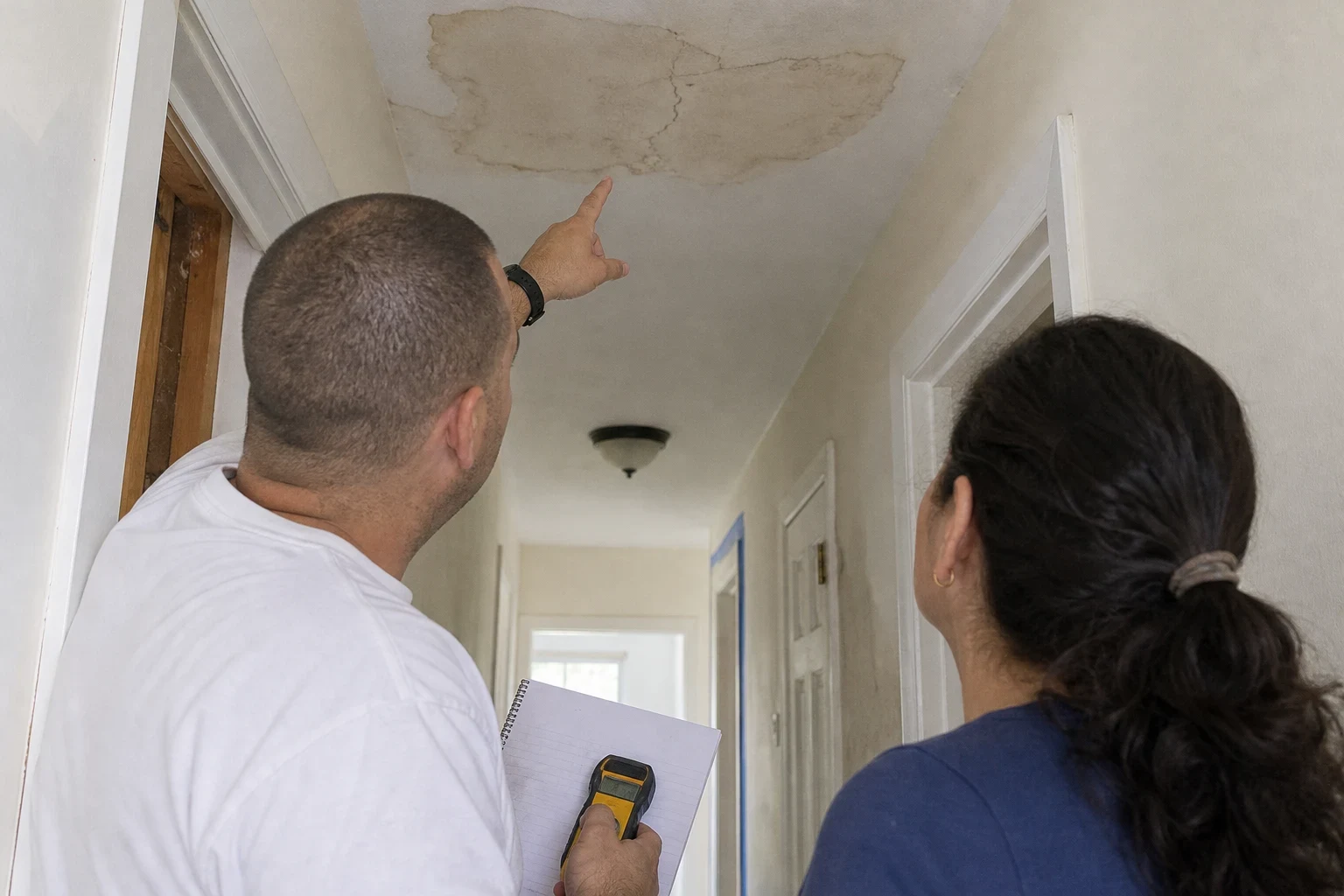
Inspect, measure and explain
We look at the damage, photograph it and tell you if a patch will do or new board is needed. Your written estimate lists every item.
- 3
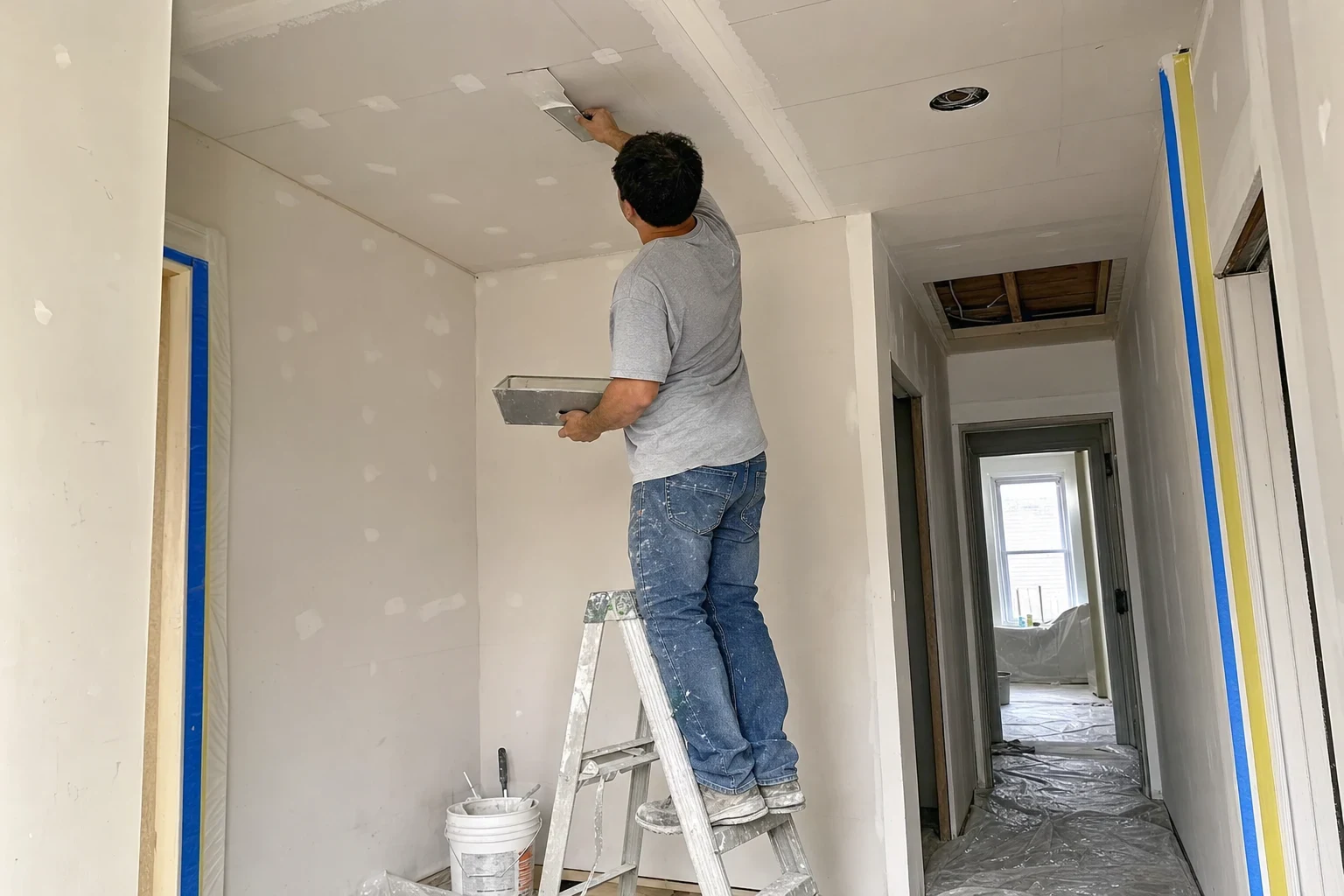
Cover, repair and finish
Floors get covered and the area gets sealed before work begins. We put up board, tape the joints and apply thin coats of mud, sanding between them. You get an update at every stage.
- 4
Touch-up and cleanup
When the surface is smooth, we prime it and touch up the paint on the repair if you'd like. Then we clean, put the room back together and go over it with you.
Drywall and Ceiling Work We Handle
Most people call us about one problem: a doorknob hole, a crack over a door frame, a stain on the ceiling after a leak. Our drywall repair and drywall patching work fixes those. If part of a wall or a full room needs new board, we handle drywall hanging and drywall finishing. We also do wall repair, ceiling repair, surface preparation and sanding, and paint touch-ups over the spots we fix. Each time, we aim for a wall where no one could guess there was ever damage.
Drywall Repair
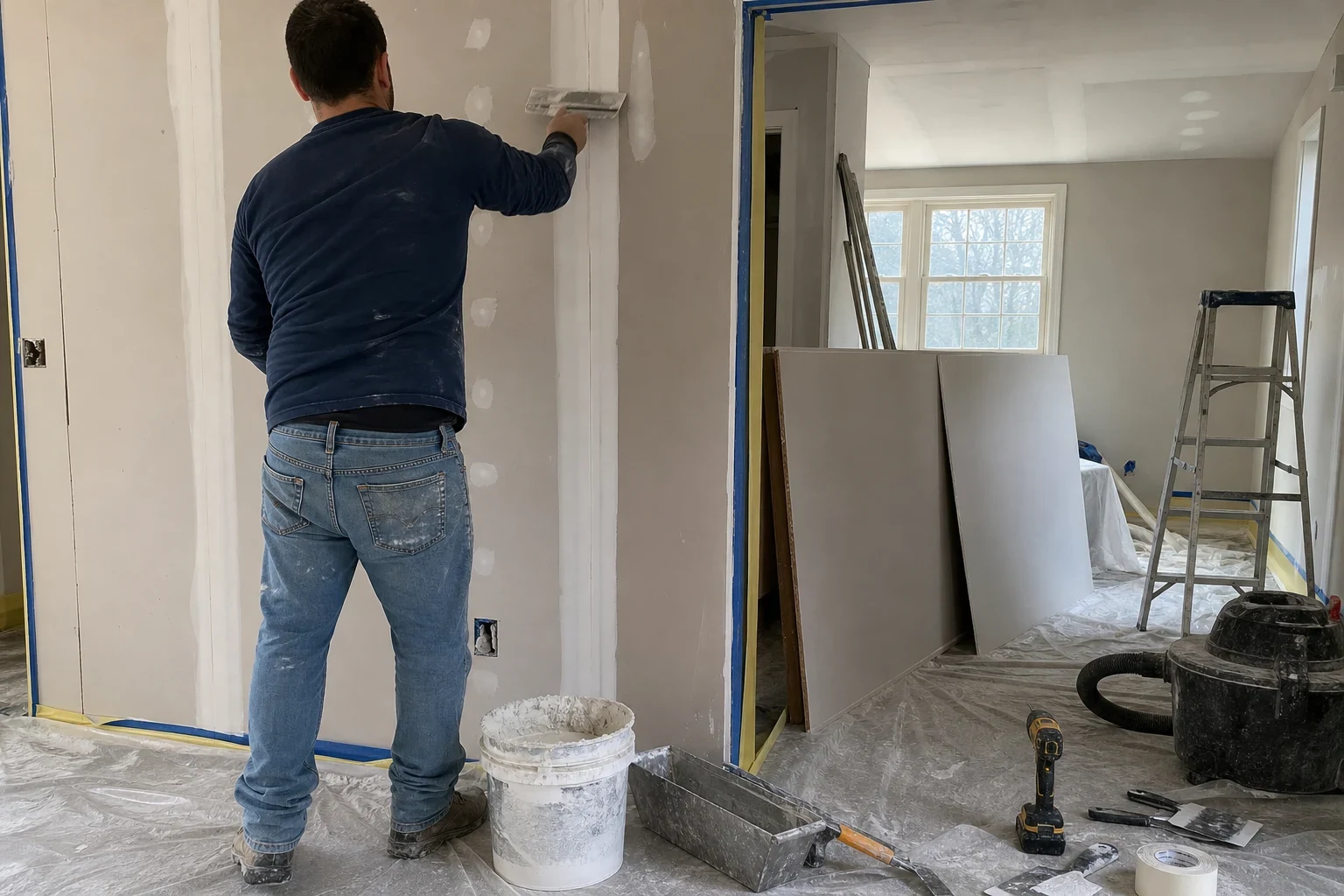
Holes, cracks, popped nails, sagging tape and water-stained drywall repaired and blended so the fix disappears into the wall.
Drywall Patching
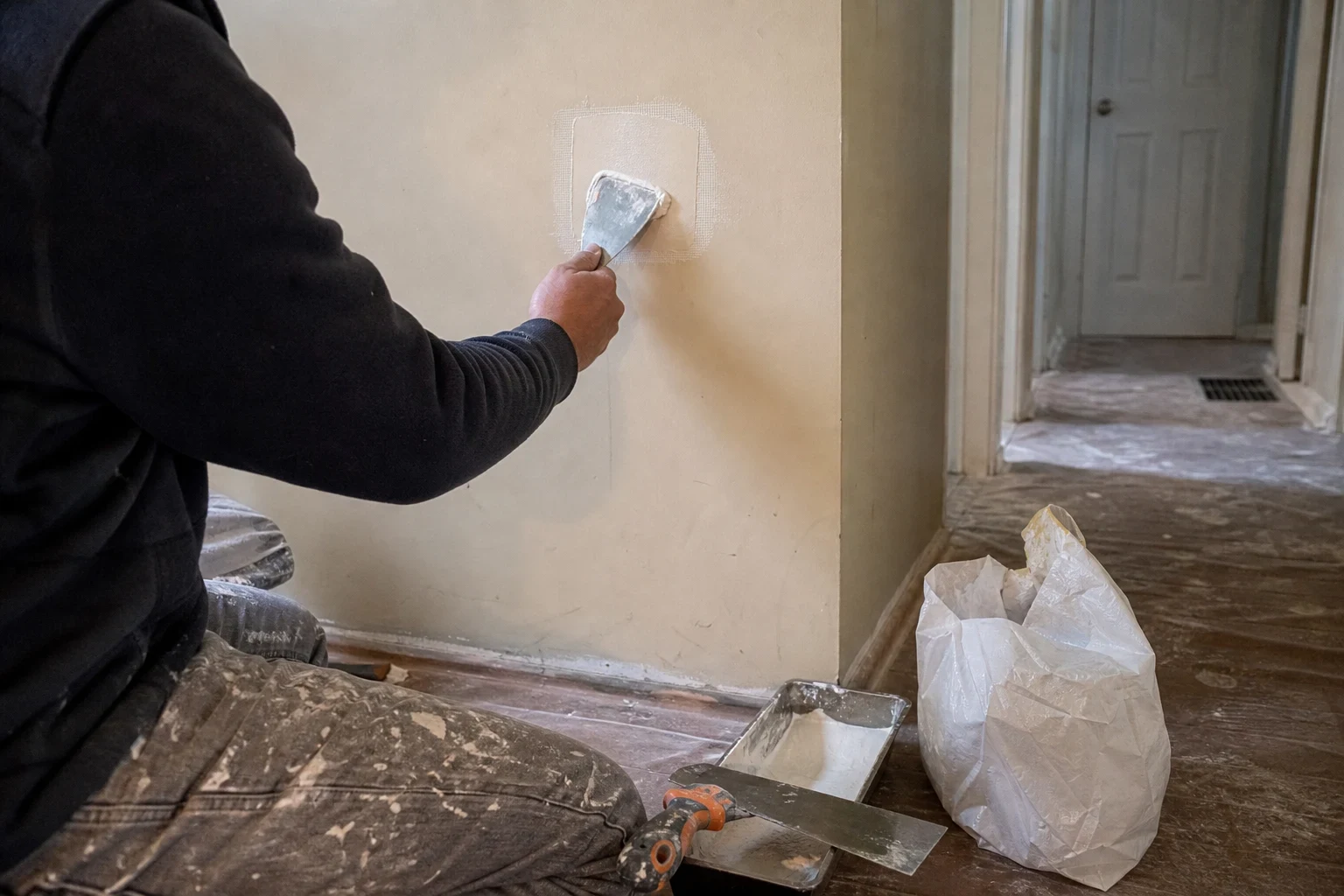
We patch doorknob holes, anchor holes, nail pops and small cutouts so the spot sits flat and ready for paint, with your floors covered while we work.
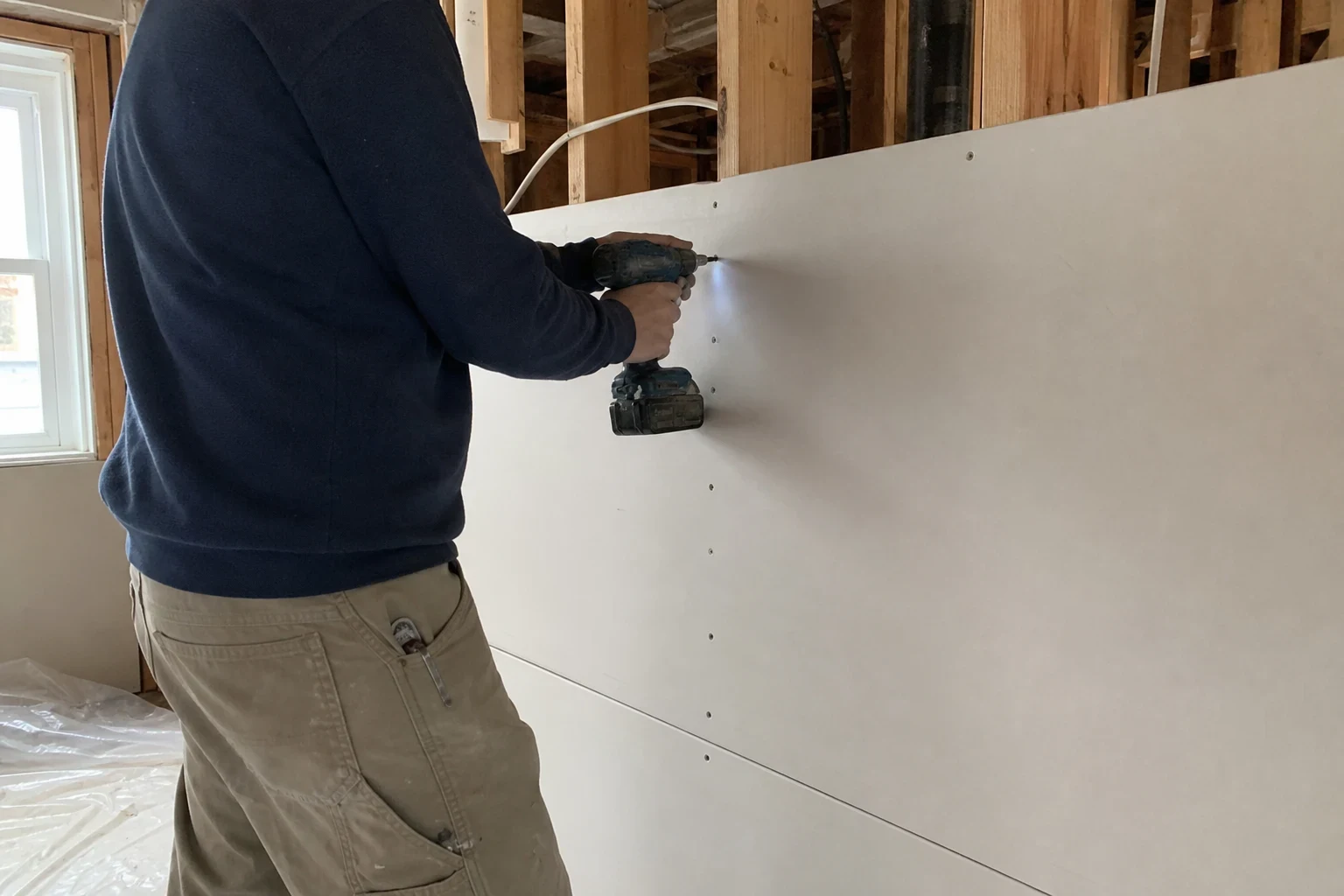
Drywall Hanging
New board hung tight and flat on walls and ceilings, with the right sheet type for each room and your floors covered from the door to the work area.
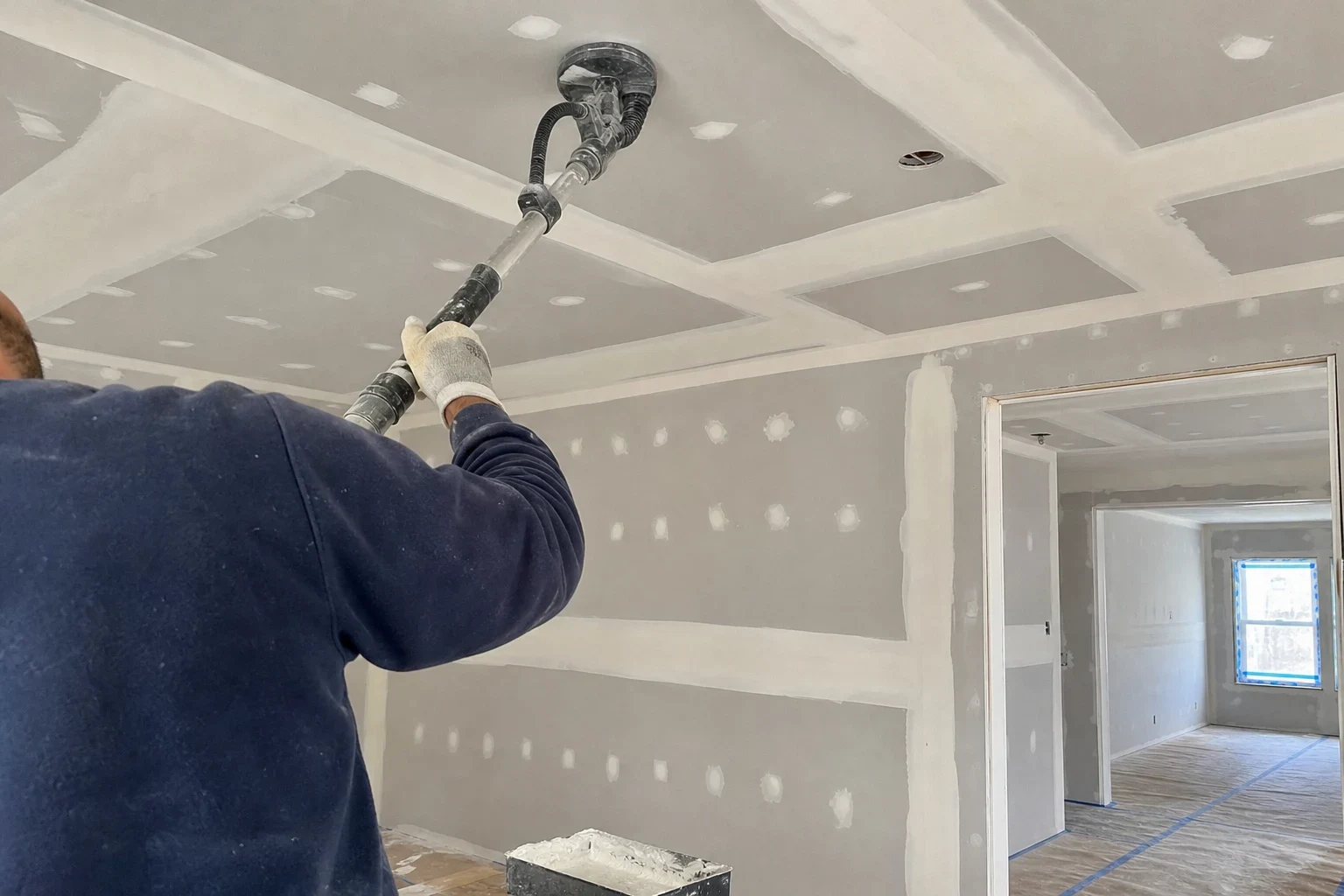
Drywall Finishing
We tape, mud and sand new or patched drywall so seams, screws and corners disappear and the wall is ready for primer and paint.
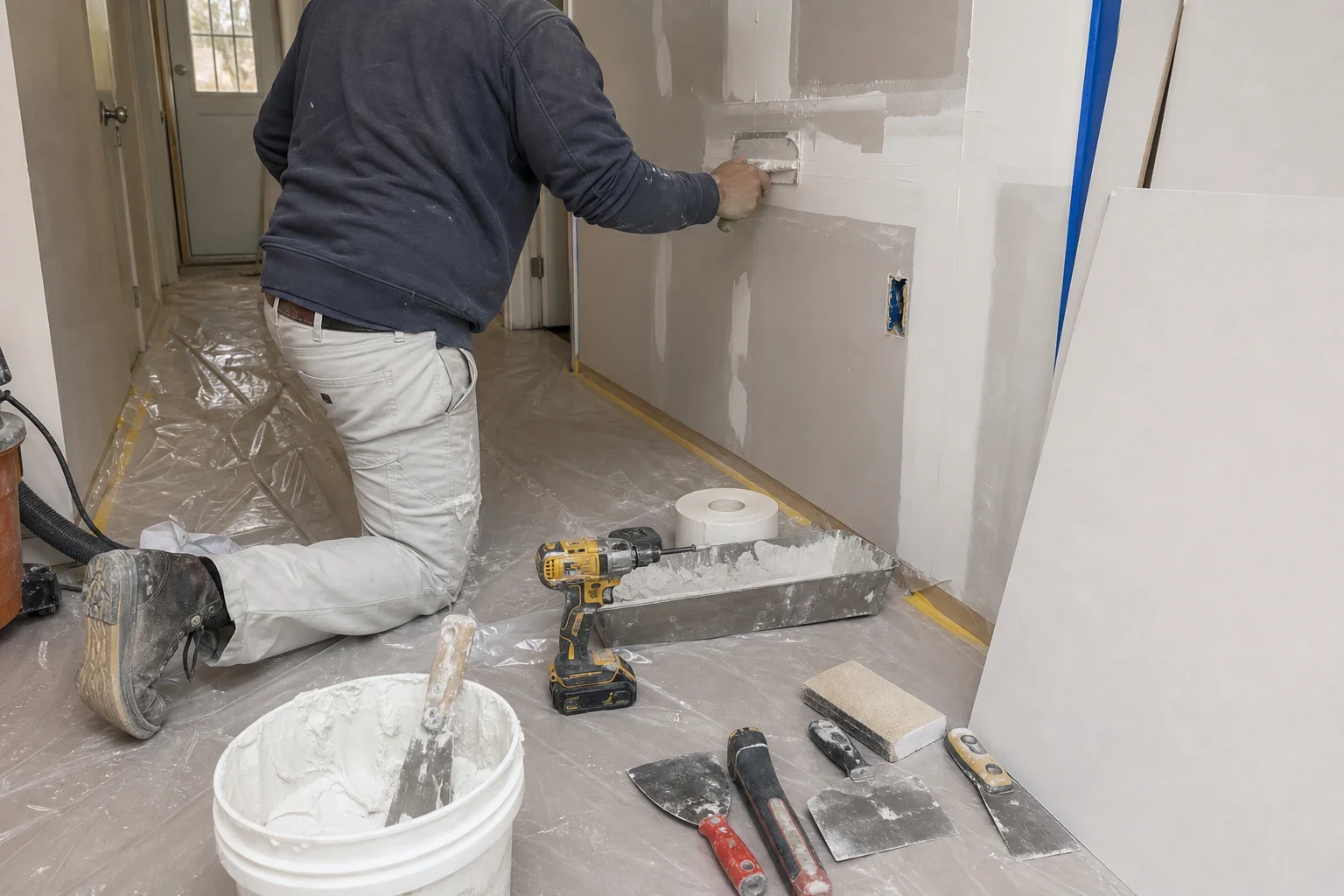
Wall Repair
We fix cracked, dented and punched-through walls so the repair blends in, with your floors covered and the room cleaned up before we go.
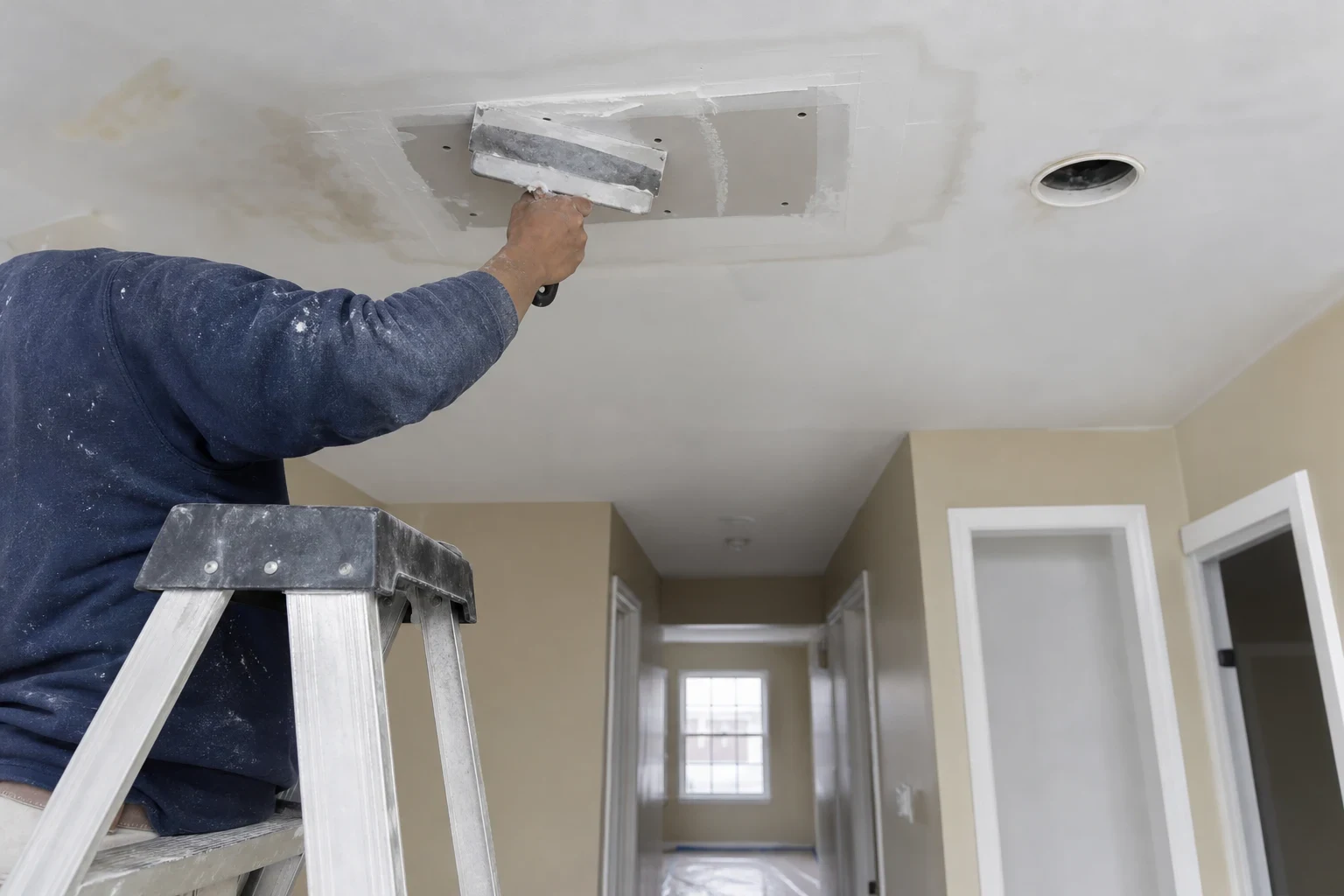
Ceiling Repair
We fix cracked, stained, sagging and holed ceilings, match the texture, and leave your floors and furniture the way we found them.
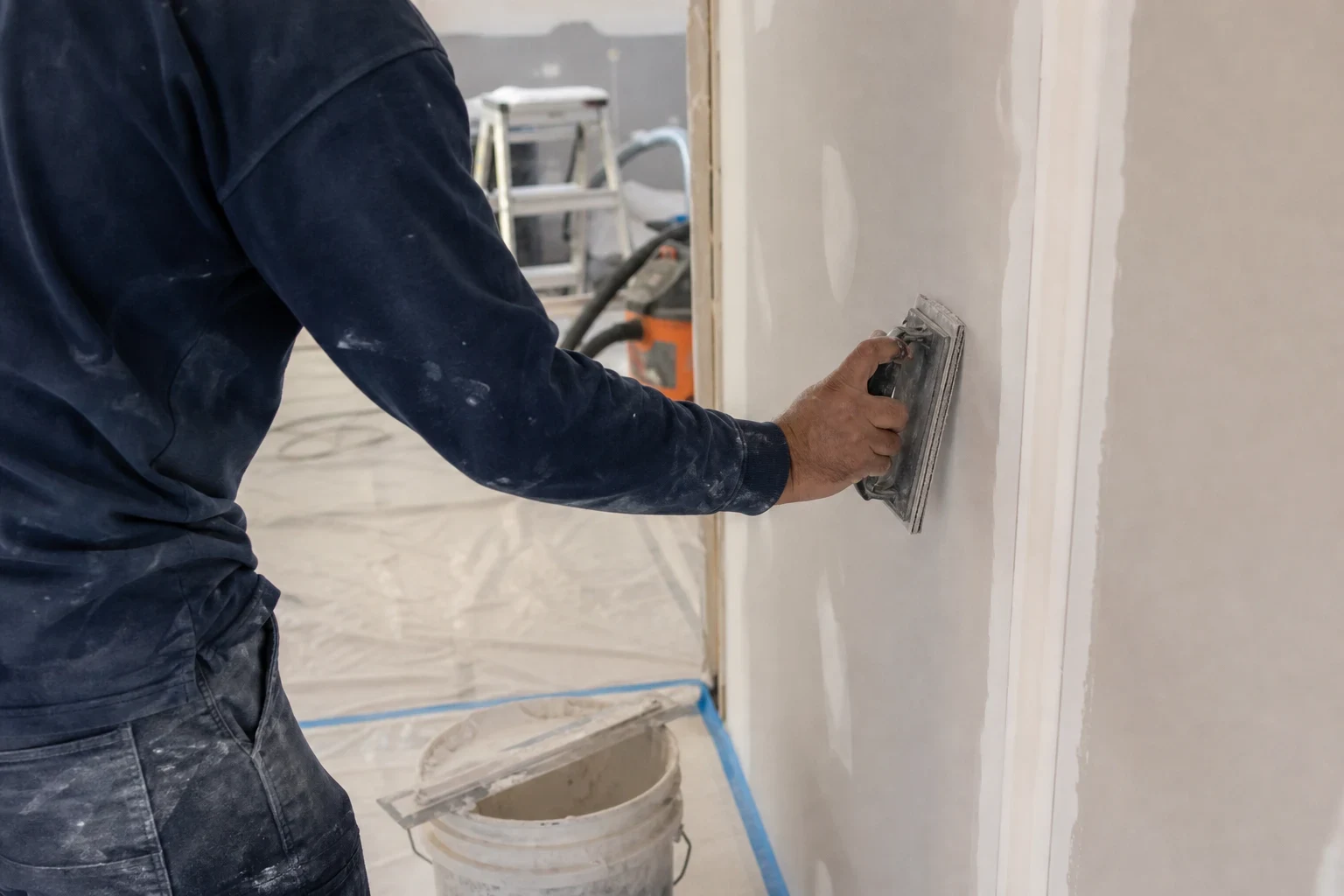
Surface Prep and Sanding
We fill, skim, sand and prime walls and ceilings so the surface is flat and ready for paint, with floors covered and dust kept in one room.
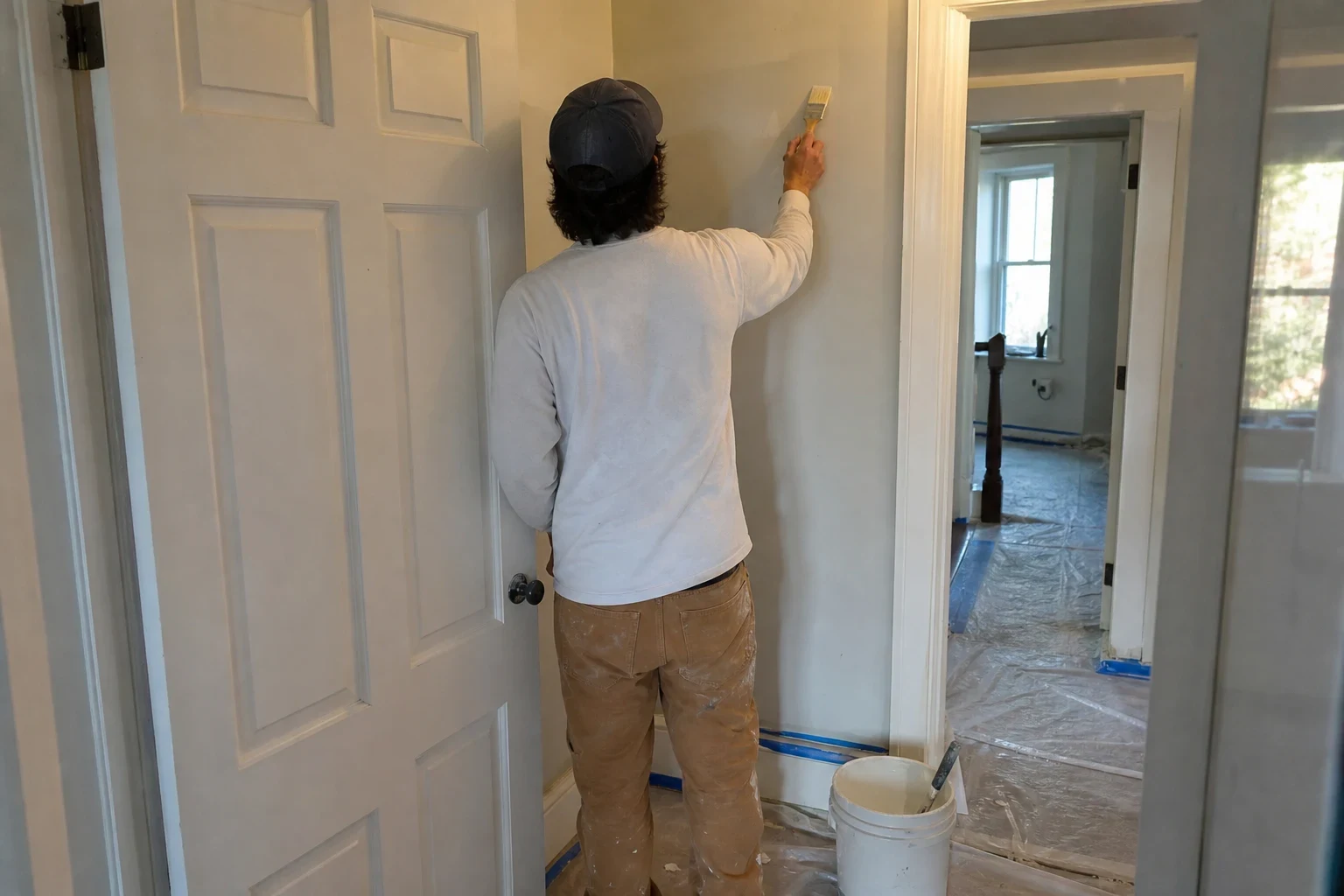
Paint Touch-Ups
Color and sheen matched over fresh patches, scuffs and nail holes, so the spot stops catching your eye.
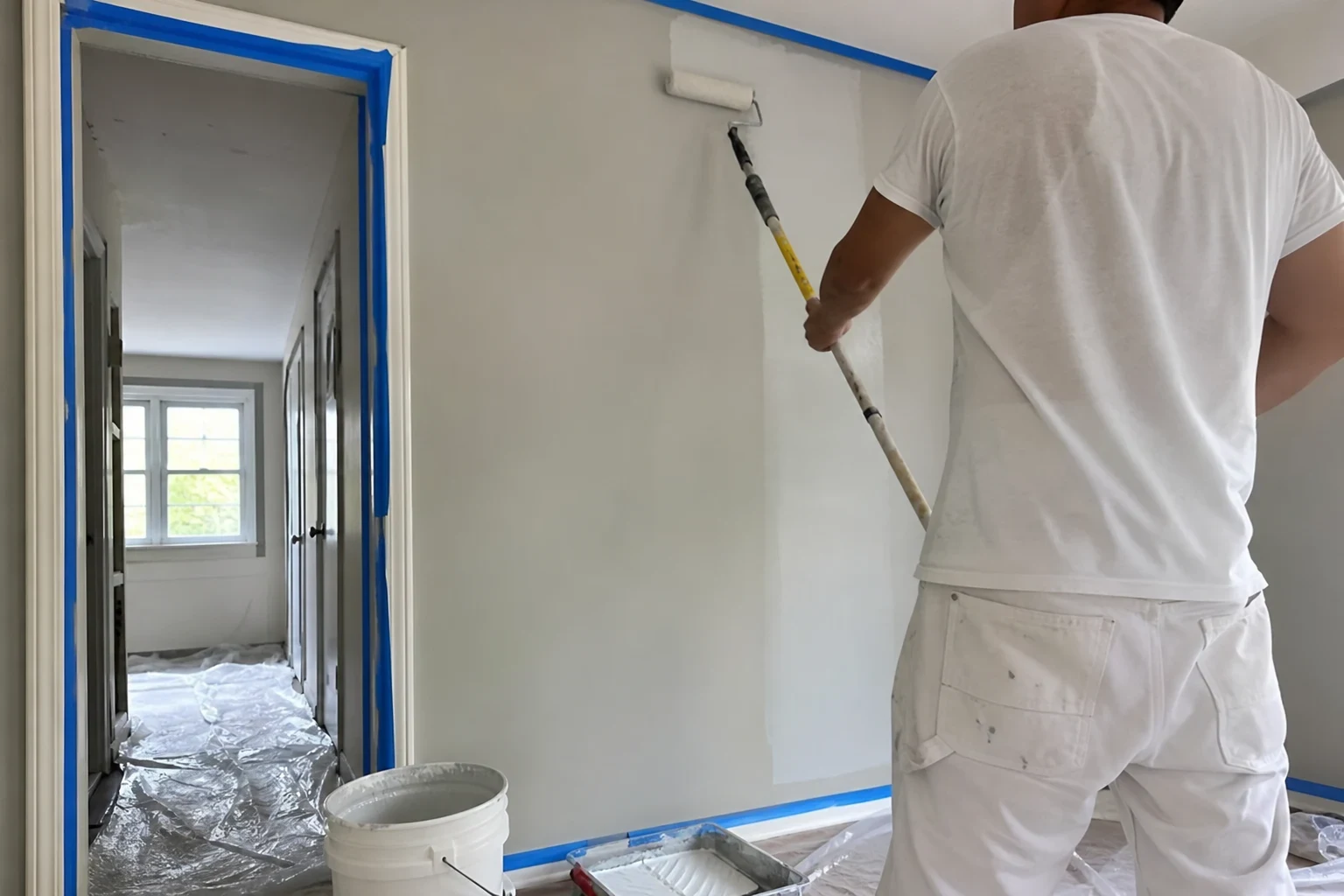
Paint-Ready Walls
We fix, sand and prime damaged walls and blend paint touch-ups over repairs, so the next coat goes on smooth and the old flaws stay hidden.
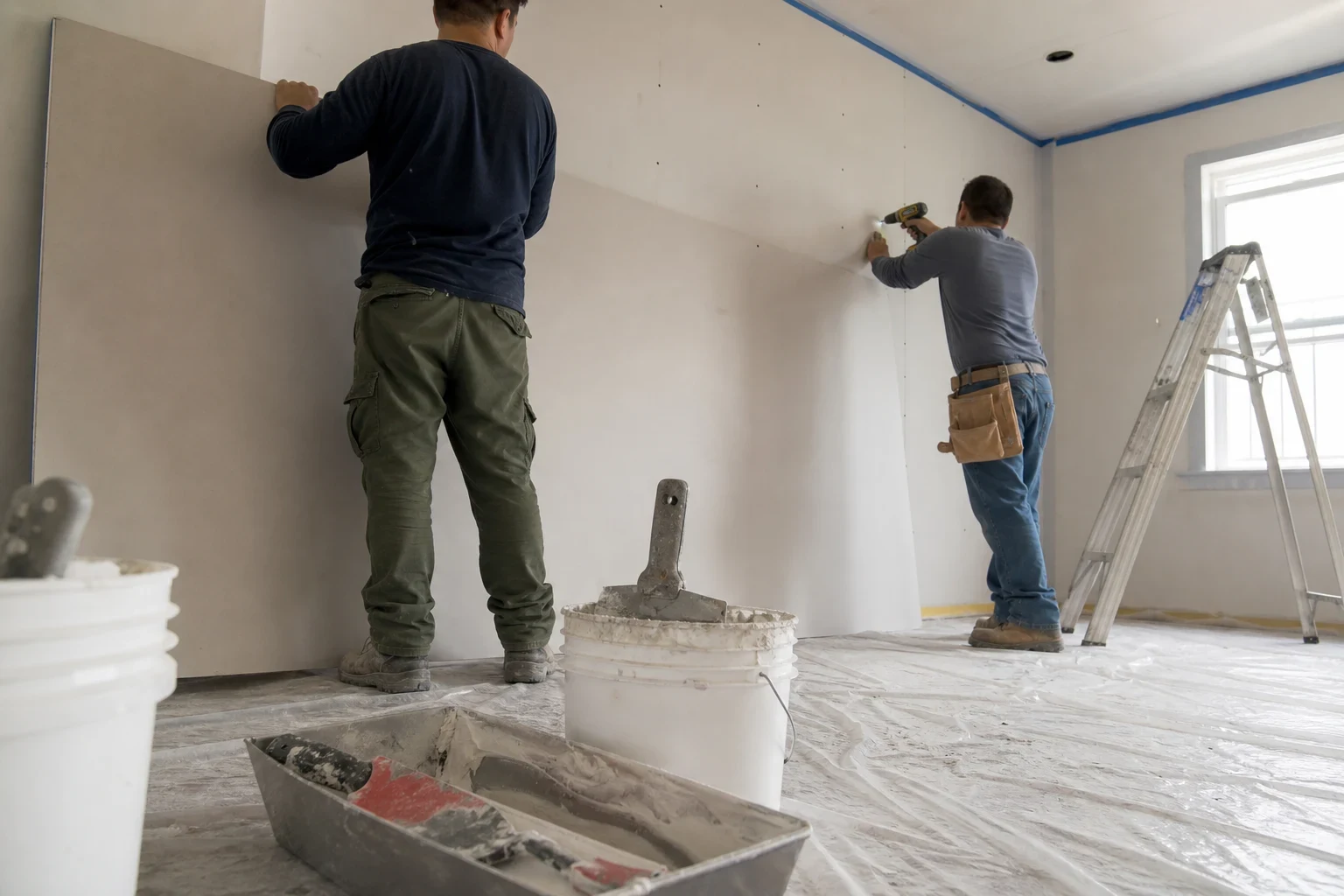
A Local Drywall Crew That Cleans Up After Itself
We are a drywall company based in Elizabeth. Our work is walls and ceilings: fixing what got broken, hanging what needs to be new and finishing it so it looks right. That is the whole job, and we keep it that way.
Most people dread having a contractor in the house. The mess, the noise and not knowing what is going on. So we keep the work area tight, we talk to you in plain words and we leave the room cleaner than we found it. Homeowners, landlords and property managers all get the same treatment.
What Changes the Price of Drywall Work
Every wall is different, so we set a price only after we see the job. Below are the things that affect it most, and your estimate explains each one so nothing catches you off guard.
We inspect the damage, take measurements and write up an estimate that lists every part of the job. You hear your quote by phone first, then we put it in writing after we have seen the wall.
- How much needs fixing
- A single fist-sized hole means a quick visit. Patches in several rooms, or an entire ceiling, call for more material and more days.
- The cause of the damage
- Damage from an impact is usually straightforward. Water can leave wet insulation, soft board or stains that show through paint, all of which add steps before finishing.
- Overhead and hard-to-reach areas
- Ceiling work goes slower and calls for ladders or scaffolding. Tall walls and stairwells need more setup.
- Finish and texture
- A smooth wall in bright light takes more coats and sanding than the inside of a closet. Getting an older texture to match can take some trial passes.
- Plaster or drywall
- Plenty of older local homes mix plaster rooms with drywall rooms. Joining a drywall patch to plaster calls for other materials and extra care along the edges.
- Time for coats to dry
- Joint compound needs drying time, more so on humid summer days. Larger jobs are often split into a few short visits instead of one long one.
Towns We Serve
Our base is Elizabeth, and we work in houses and rentals all over the city. We also go to towns close by, such as Newark, Bayonne, Union, Irvington, Linden, Carteret, Cranford, Roselle, Hillside and Harrison. Single-family homes and units in multi-family buildings get the same floor covering and cleanup.
- Elizabeth
- Newark
- Bayonne
- Union
- Irvington
- Linden
- Carteret
- Cranford
- Roselle
- Hillside
- Harrison
Don't see your town? Ask us on the phone, and we will give you an honest answer on whether we can reach you.
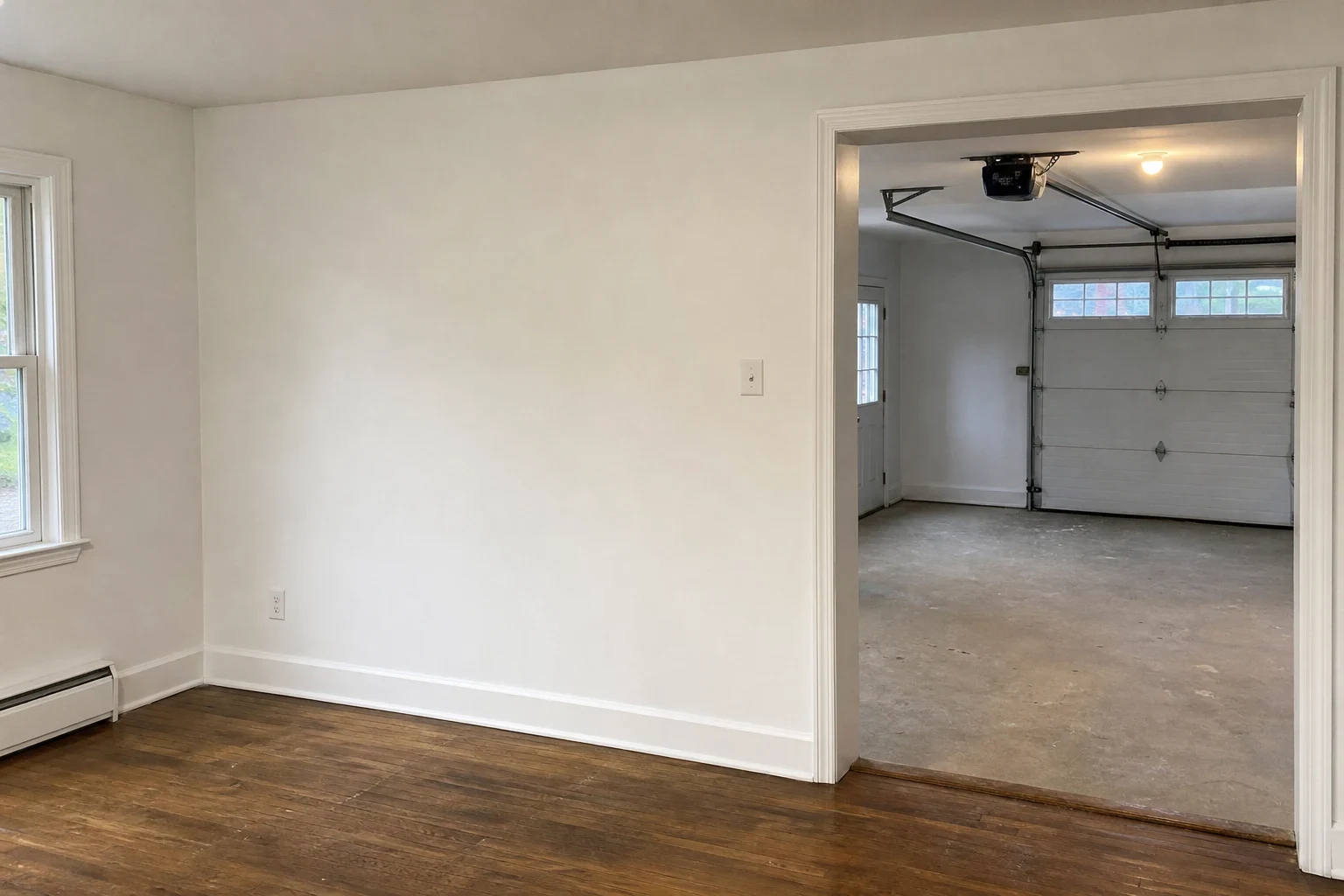
How We Work Inside Your Home
Drywall work makes dust and moves furniture. We plan around that so your house still feels like yours while we are in it.
- We cover before we cut
- Drop cloths and floor protection go down first, along the path from the door to the work area. Furniture gets moved or wrapped. We seal doorways with plastic when sanding is involved so dust stays in one room.
- You know what is happening
- We tell you what we found, what we plan to do and how long each stage takes. If we open a wall and see something different than expected, we stop and show you before going further. Landlords and property managers get the same updates, so tenants are not left guessing.
- An honest answer on patch or replace
- A small hole does not need a full sheet of new board. A sagging, water-soaked ceiling usually does. We tell you which one you have and why, and we take photos so you can see it too.
- Finish work that disappears
- Mud is applied in thin coats and sanded between each one. We match the existing texture, smooth, orange peel or knockdown, so the repair blends into the rest of the wall.
- The room goes back the way we found it
- At the end of each day we sweep, vacuum and pick up scraps. On the last day we pull the protection, put furniture back and walk the room with you.
What Customers Ask Most
- Will the job make a lot of dust?
- There is some, and we hold it in one place. Plastic seals the doorway, floors get covered and our sanding methods keep less dust in the air. We vacuum at the close of each day, not only at the end of the job.
- Will the repair match my existing texture?
- Usually, yes. We study the current finish, whether smooth, orange peel, knockdown or an older hand texture, and test it on the patch before finishing. Older ceilings can take extra effort to blend, and we tell you at the start if yours is one of them.
- My ceiling got wet from a leak. Can you repair it right away?
- Not until the leak is fixed and everything has dried. A patch over a damp spot brings the stain and soft board right back. After the source is taken care of, we remove the damaged board, look at the insulation and replace whatever needs it.
- Can you help with an insurance claim?
- We can describe what we find, take photos and write up an itemized estimate for you to send your insurer. We are not your adjuster and we do not decide what your policy pays for. That stays between you and the insurance company.
- Does someone have to be home during the work?
- We need someone to let us in and go over the job with us at the beginning and the end. Between those, plenty of customers carry on with their day. Landlords and property managers often set up access and get phone updates from us.
- How long will my repair take?
- Small patches often take a couple of brief visits, since mud must dry between coats. A whole ceiling or a room of new board can run several days. Your estimate comes with a timeline.
- Will I have to paint after the repair?
- Fresh mud and primer won't match your paint by themselves. We offer paint touch-ups on the repaired spot so it blends. If you kept paint from the original job, have it ready, since that gives the closest match.
Got a Hole, Crack or Stained Ceiling?
Tell us what happened and we will set a time to look. You get a clear plan, a written estimate and a crew that covers your floors before starting.