ServicesDrywall Hanging
Drywall Hanging in Elizabeth
We hang new drywall on bare studs and joists, from one opened-up wall to a full basement. We pick the right board for each spot, screw it off properly, and keep your floors covered and the work area clean while we do it.
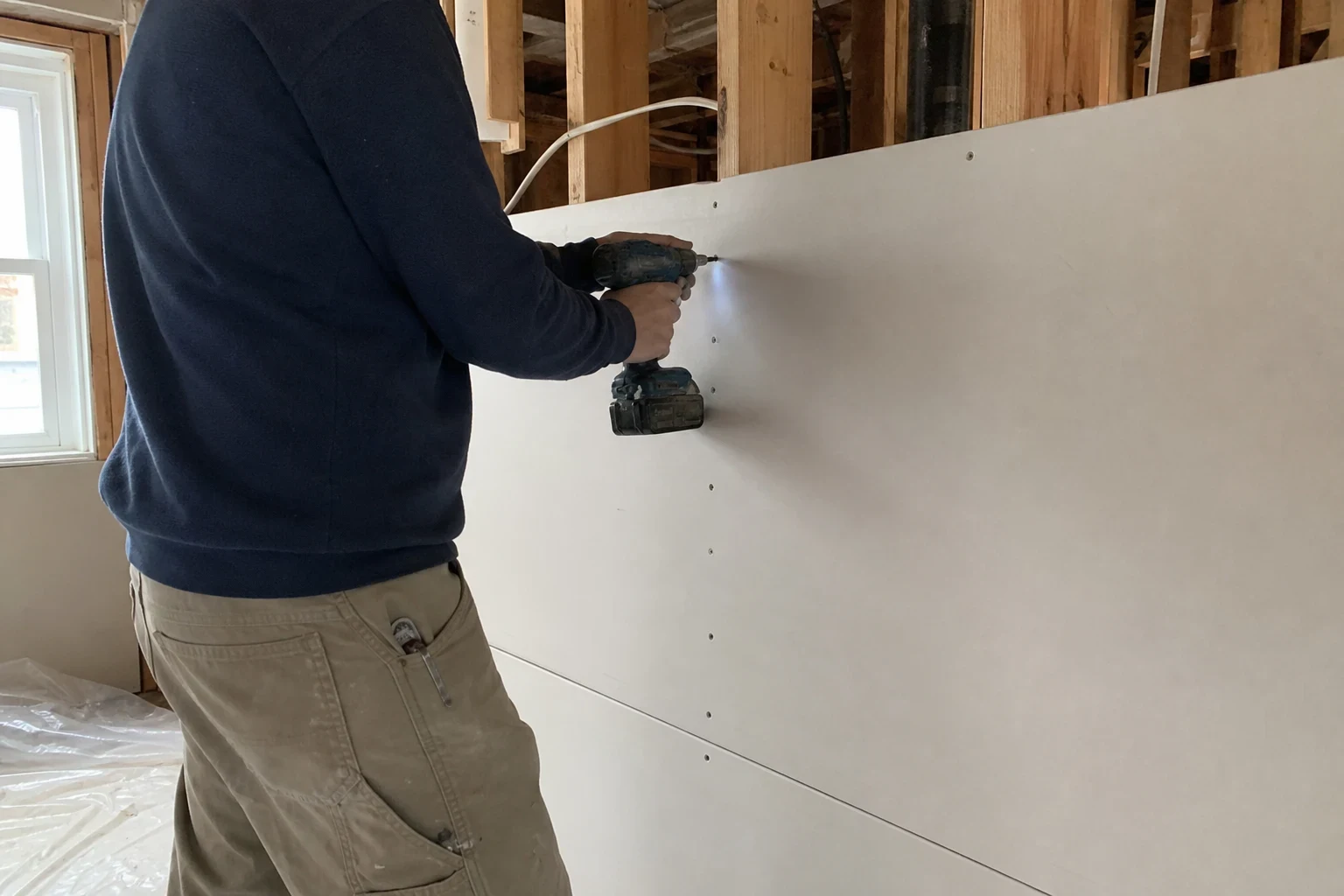
Walls and Ceilings Hung Solid From the Start
Once a room is finished, nobody sees how the board was hung, but it still shapes how the walls look for years. Loose screws work their way out. Seams in the wrong place crack. Butt joints on a ceiling catch the light every time. We hang the sheets so finishing goes smoothly and your walls come out flat and sturdy.
Hanging fits when the framing is exposed: a room stripped after water damage, a basement being finished, an addition, or old plaster that can't be saved. For a single hole or a damaged area, our drywall patching or drywall repair pages are a better match.
Lots of Elizabeth homes are older and have narrow stairways and tight hallways. We work out how each sheet will come in before we arrive, so your walls and trim don't get scraped along the way.
What Our Hanging Work Covers
- The right board for each room
- Half-inch board on most walls and 5/8-inch on ceilings so they stay flat. Moisture-resistant board in bathrooms and basements. Fire-rated board where code calls for it, like the wall between an attached garage and the house.
- Ceilings first, then walls
- We hang the ceiling before the walls so the wall sheets hold up the ceiling edges. On larger ceilings we use a drywall lift instead of holding sheets overhead.
- Fewer, better-placed seams
- We run sheets long and horizontal where we can and stagger the joints. Fewer butt joints means less tape, less mud and fewer places for cracks later.
- Proper fastening
- Screws set just below the surface without tearing the paper, spaced closer on ceilings than on walls. That keeps nail pops from showing up after the first winter.
- Cutouts and corners
- Clean cuts around outlets, switches, windows and vents. Metal or paper-faced corner bead on outside corners, ready for taping.
- Cleanup every day
- Scraps go out, dust gets swept, and the path through your home stays clear. You are never left with a pile of offcuts in the hallway.
Signs You Need New Drywall Hung
The room is down to studs
After a leak, mold work or demolition, the old wall is gone. New board is the only way forward.
Plaster is crumbling or loose
When plaster is soft, bulging or pulling off the lath in big areas, patching it keeps failing. Hanging new board over or in place of it gives you a sound surface.
You are finishing a basement or attic
New framing needs board. Basements need moisture-resistant sheets, and attic spaces often need careful work around slopes and knee walls.
A ceiling is sagging
A ceiling that dips between joists usually means the board got wet or was too thin. Replacing it with heavier board fixes the cause, not just the look.
Walls were opened for wiring or ductwork
Large sections cut out for new runs are often faster to rehang than to patch in pieces.
How a Hanging Job Runs
- 1
Walkthrough and plan
We look at the framing, measure the room, and check how sheets will get in. You get a clear plan for which board goes where and how many days we expect.
- 2
Protect the path
Before any board comes in, we lay floor runners from the door to the room and cover stairs and furniture. Plastic sheeting goes up where dust could travel into the rest of your home.
- 3
Check the framing
We look for crooked studs, missing backing and loose joists. If something needs fixing before we hang, we show you and explain it first.
- 4
Hang and fasten
Ceilings go up first, then walls. We cut in the openings, set the screws and install corner bead.
- 5
Walk it with you
At the end of each day we tell you where things stand and what happens next. When hanging is done, the room is ready for our drywall finishing work.
What Moves the Price
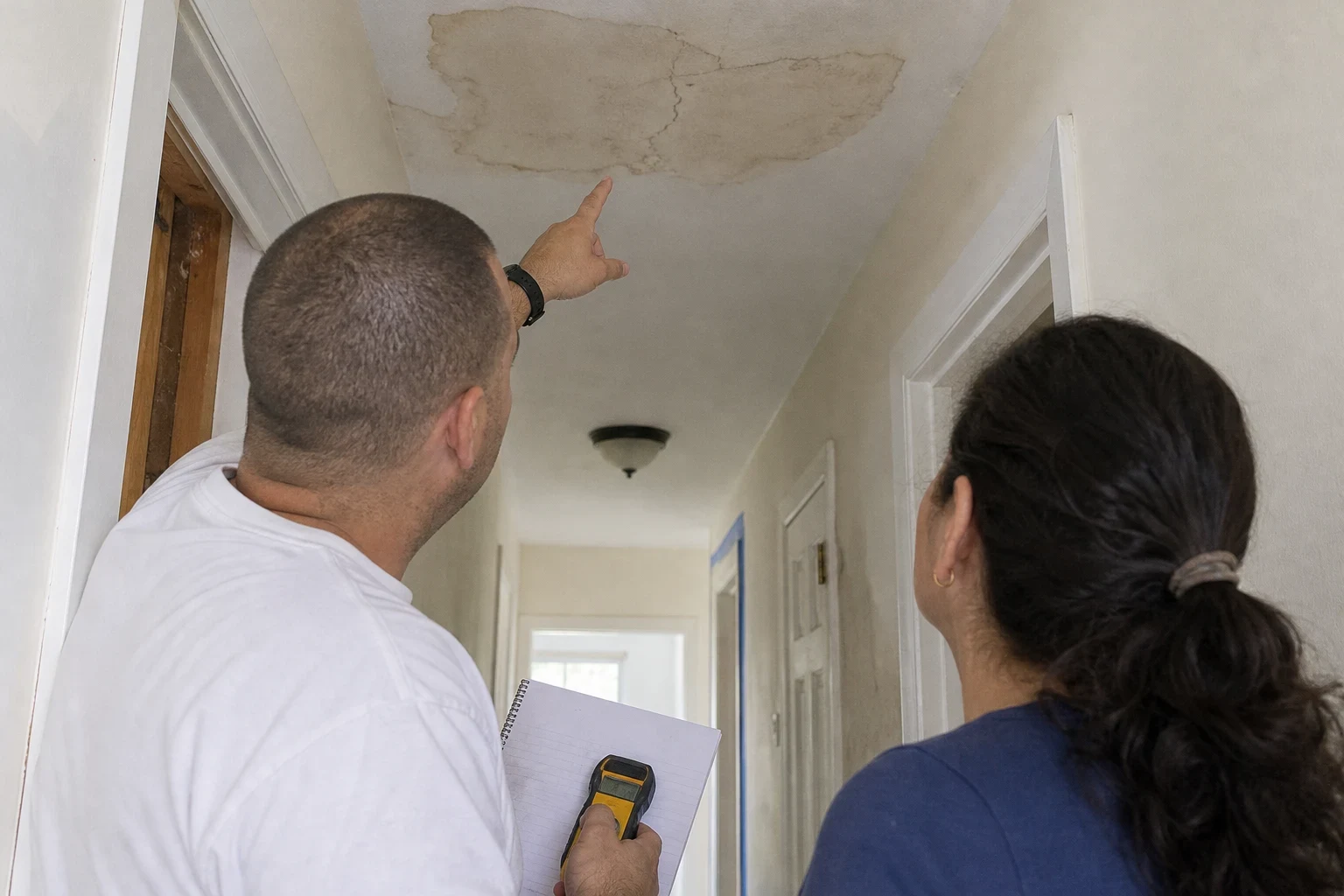
Most of the price comes from how many sheets the room takes and the effort of carrying them in and lifting them into place. Two rooms the same size can come out at different numbers. We go over each line with you before work starts so nothing on the bill is a surprise.
- Size and ceiling height
- More wall and ceiling area means more sheets and more hours. Rooms taller than eight feet need a lift or scaffolding to reach safely.
- Specialty sheets
- The green or purple sheets made for damp rooms, and the thicker Type X sheets used near an attached garage, run higher per piece than plain gypsum. We put them in only where the room actually calls for them.
- Getting board inside
- Third-floor rooms, tight turns on the stairs and no space to carry full sheets all slow the job. Sometimes we have to cut sheets down, which means extra seams to tape later.
- Framing condition
- Studs that are out of line need shims or furring strips before board goes on. Old plaster may have to be torn out first.
- How smooth it needs to be
- Hanging and finishing are separate steps. A living room wall under bright side light takes more finishing than a closet or utility room.
Questions About Hanging Drywall
Something not covered here? (908) 332-8943
Will you finish the board after it is hung?
Yes. Hanging puts the sheets up and screws them off. Our drywall finishing work handles the tape, mud and sanding that make the wall ready for paint. Most people hire us for both, so a single crew answers for how it turns out.
Can new drywall go over old plaster?
Many times, yes, when the plaster is held tight and the wall is close to flat. Putting thin board over solid plaster cuts down on dust and tear-out. Loose plaster should be removed first, and we will tell you which kind you have.
How long will the job take?
One room usually takes a day or two to hang. A whole basement runs longer. Finishing adds several days, since every coat of mud needs to dry. Before starting, you get a plan laid out day by day.
Does hanging make a mess?
Far less than sanding does. Mostly it leaves offcuts and a bit of gypsum dust from cutting. We cover the floors we walk on, bag the scraps and sweep before leaving each day.
Will I need a permit?
That depends on the work and on your town. Swapping out board in place tends to be simpler than an addition or new construction. We go over it with you so you know what applies before we begin.
Let's Plan Your New Walls
Tell us what the room looks like now and what you want it to be. We serve Elizabeth and nearby towns like Union, Linden and Cranford.