ServicesSurface Prep and Sanding
Wall Prep and Sanding in Elizabeth
A paint job is only as smooth as the surface it goes on. We fill dents, skim the rough areas, sand it all flat and put primer on. Your floors get covered and the room gets sealed off before sanding starts, and you hear what we are working on each day.
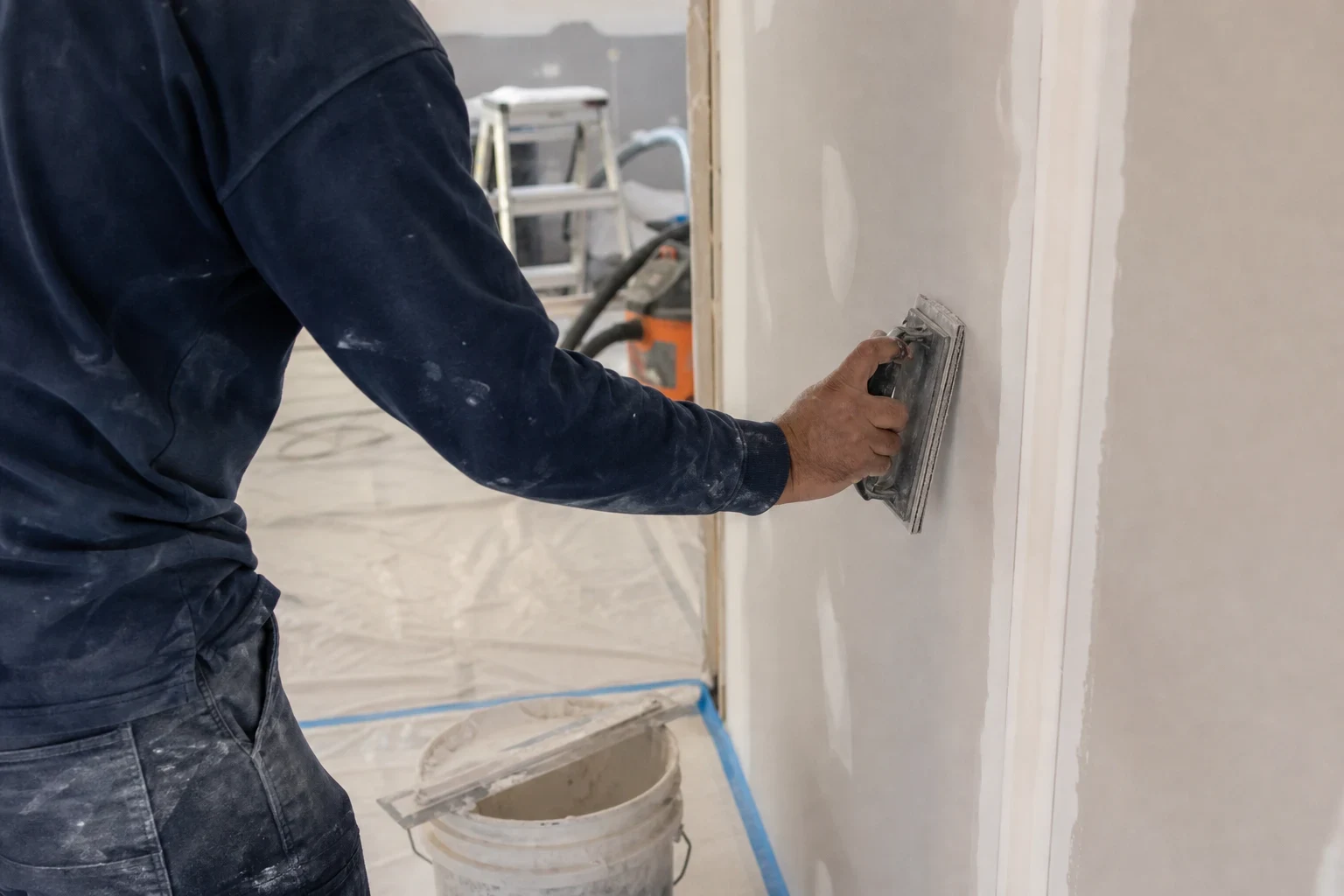
The Work Nobody Sees, Done Right
Surface prep is everything that happens before the paint can comes out. Nail pops get reset. Old anchor holes get filled. Ridges from a past patch get feathered out. Peeling or glossy spots get scuffed or scraped so new coats grab. Then we sand, check the wall under a bright work light and prime.
It's the right call when a room is about to be painted and the walls have years of wear, when a new patch still shows through, or when a tenant has moved out and left the walls full of small damage. If you have a bigger hole or a sagging ceiling, that falls under drywall repair or ceiling repair first. We can do both on the same visit.
Sanding makes dust. We plan for that from the start, so the rest of your home stays the way you left it.
What Our Prep Work Covers
Floor and room protection
We lay down floor protection from the door to the work area and cover furniture we can't move. Doorways get plastic sheeting. We tape off heating and AC vents so dust doesn't travel through the house.
Filling and skim coating
Small holes, dents and cracks get filled with joint compound. Walls with a lot of small damage or old texture get a thin skim coat so the whole surface reads as one flat plane.
Repairing torn paper
When old wallpaper or tape comes off, it often tears the drywall's paper face. Mud put straight over that bubbles. We seal torn paper with a primer made for it before any compound goes on.
Sanding with dust control
We sand with a vacuum-connected sander where we can and finish edges and corners by hand. The goal is smooth without gouging the paper or rounding over corners.
Inspection under raking light
We hold a light low against the wall to show every ridge and dip. Anything we find gets touched up and sanded again before we call it done.
Priming
Bare compound and new drywall soak up paint unevenly. We prime so your finish coat goes on even. Water stains get a stain-blocking primer so they don't bleed back through.
Signs Your Walls Need Prep First
Patches show through paint
You can see a square or a halo where someone fixed a hole. That's a sign the patch was never feathered out or primed.
Lines and dents in side light
Morning sun across a wall shows tape seams, dents and old screw spots. Fresh paint will make them stand out more, not less.
Paint peeling in sheets
When paint lifts, the next coat lifts with it. The loose paint has to come off and the edges have to be sanded flat.
Leftover wallpaper glue
Glue residue makes new paint crack and wrinkle. It needs to be washed off and the wall sealed before anything else goes on.
Lots of small holes
Picture hooks, shelf anchors and TV mounts add up. One at a time they're easy. Forty of them call for a skim coat.
How a Prep Day Runs
- 1
Walk-through and plan
We look at every wall with you and point out what we see. You hear which areas need filling, which need a skim coat and which just need a light sand. If your home was built before 1978, we talk with you about older paint before we sand anything.
- 2
Set up and cover
We protect the path in and the floor in the room, move what we can and cover the rest. Vents get taped and doorways get sealed. Then the work starts.
- 3
Fill, dry, sand
Compound goes on in thin coats. Each coat dries before we sand it, so deep fills may take more than one day. We tell you at the start how many visits to expect.
- 4
Check, prime and clean up
After the light check and priming, we vacuum the room, wipe down sills and take up the floor protection. You get a clean work area and walls ready for paint.
What Moves the Cost
Prep pricing depends on how much is wrong with the wall, not just how big the room is. We look at the surface in person and explain each part of the estimate so you can see where the time goes.
- Condition of the surface
- A few nail holes is a quick job. Torn paper, peeling paint or glue residue takes more steps and more drying time.
- Square footage and height
- More wall means more filling and sanding. Tall walls and ceilings need ladders or staging and take longer to sand well.
- Skim coat or spot fill
- Spot filling handles scattered damage. A full skim coat costs more but is often the only way a heavily worn wall comes out flat.
- Furniture and access
- A cleared room goes faster. A furnished room or occupied rental takes more covering and more careful setup.
- Primer type
- Plain primer works for most walls. Stains, torn paper and glossy old paint need specialty primers that add to the material cost.
Questions About Wall Prep and Sanding
Something not covered here? (908) 332-8943
Will the sanding dust end up in every room?
Sanding always makes a fine powder, and our job is to hold it in the room we are working in. We tape plastic across the doorway, seal the vents and use a vacuum-connected sander anywhere it fits. At the end we vacuum the floor and wipe the sills and trim, so you don't find dust in the hall a week later.
Do I have to be out of the house?
In most cases, no. People usually stay home and simply avoid the room we are in. We let you know which rooms to keep out of and for how long.
Do you sand plaster walls?
Yes, with a different approach. Plaster is harder than joint compound and does not sand the same way. We fill and skim the cracks, then sand the new material rather than the old plaster. Any loose plaster is repaired before that.
When can painting start?
As soon as the primer dries. We leave the walls smooth and primed. When a small repaired spot needs to match the paint already on the wall, our paint touch-ups service takes care of it.
Why does the prep take more than a day?
Compound must be completely dry before we sand it. Deep fills and skim coats may need two or three coats. Hurrying makes it shrink and crack down the road, so we give it the time.
Ready Your Walls Before the Paint Goes On
Let us know what shape the room is in and your deadline. We will book a time to see it and lay out a clear plan.