ServicesDrywall Repair
Drywall Repair in Elizabeth, NJ
We fix holes, cracks, popped nails, loose tape and water-damaged drywall in your home. Floors get covered before any tool comes out. Dust stays contained. And we tell you what we found and what it takes to fix it before we start.
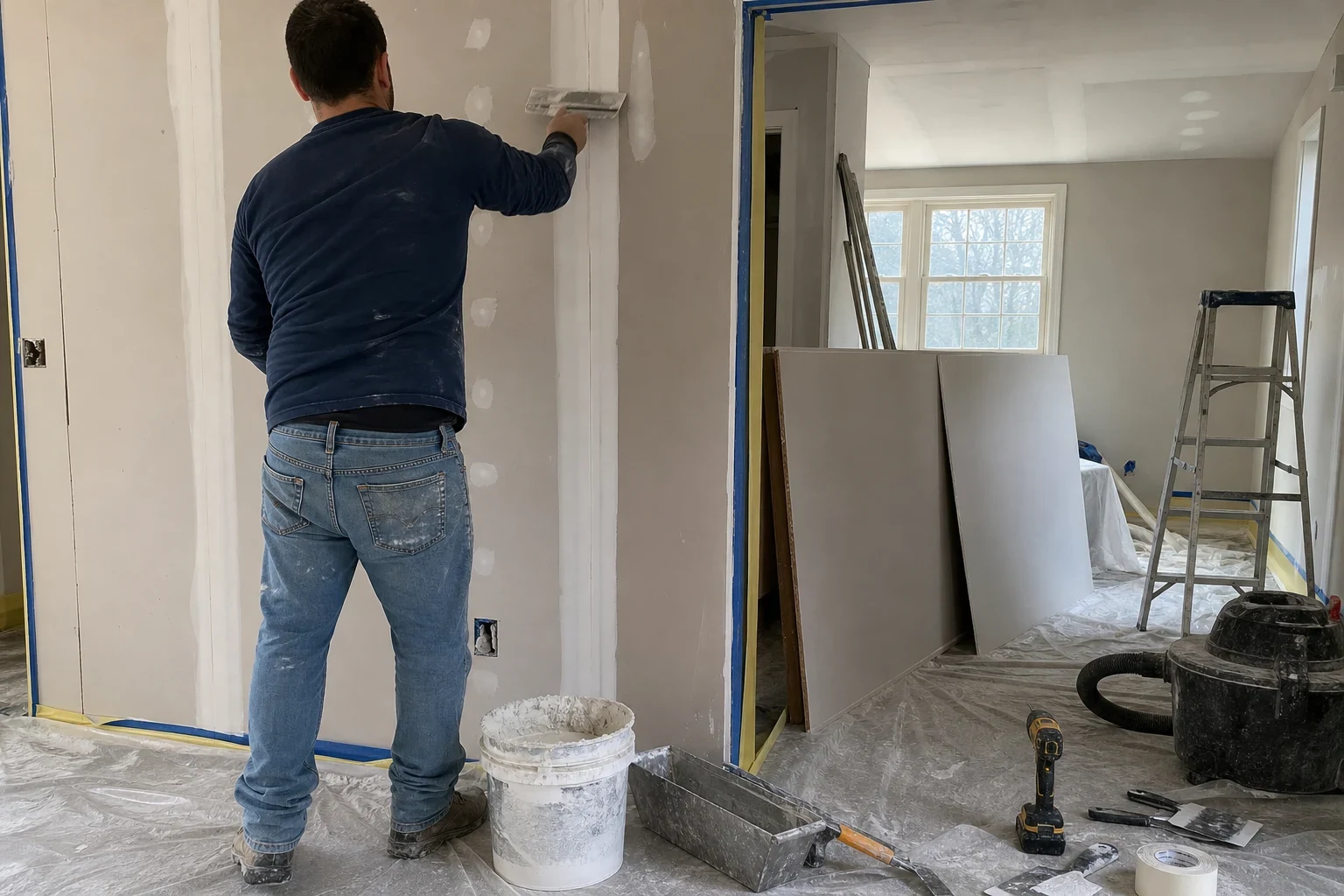
When drywall repair is the right call
Drywall is tough in some ways and fragile in others. It holds up for decades, then a doorknob goes through it, a leak softens it, or the house settles and a seam cracks open. Most of that damage can be repaired. You rarely need a whole new wall.
Our job is to find out why the drywall failed, fix that spot properly, and leave a surface you can't pick out once it's painted. A crack that keeps coming back usually means loose tape or a moving joint, so we deal with the cause and not just the line you can see.
We work inside lived-in homes every day, so we treat yours that way. Drop cloths and plastic go down first. We keep you posted on what's happening and when the next coat goes on. When we leave, the room is swept and vacuumed.
What a drywall repair includes
- Floor and furniture protection
- We lay drop cloths from the door to the work area and cover anything we can't move. Where sanding is involved, we hang plastic to keep dust in the room.
- Cutting out bad material
- Soft, crumbling or water-stained drywall gets cut back to solid board. We check the studs or framing behind it before anything new goes up.
- Patch, tape and mud
- Small holes get a patch. Bigger damage gets a new piece screwed to framing or backing. Then we tape the seams and apply joint compound in thin coats, letting each one dry.
- Sanding and texture matching
- We sand each coat smooth and feather it wide so there's no bump. If your wall or ceiling has texture, we match it so the repair blends in.
- Primer and paint touch-up
- Fresh compound soaks up paint differently, so we prime it first. If you have leftover paint, we can do a paint touch-up on the repaired area.
Signs your drywall needs repair
Cracks that keep coming back
A crack running from the corner of a door or window, or along a ceiling seam, often means the tape has let go. Filling it with caulk won't hold.
Nail pops in a row
Small round bumps along a stud line are fasteners backing out. We reset them with screws and refinish the spots.
Stains or soft spots
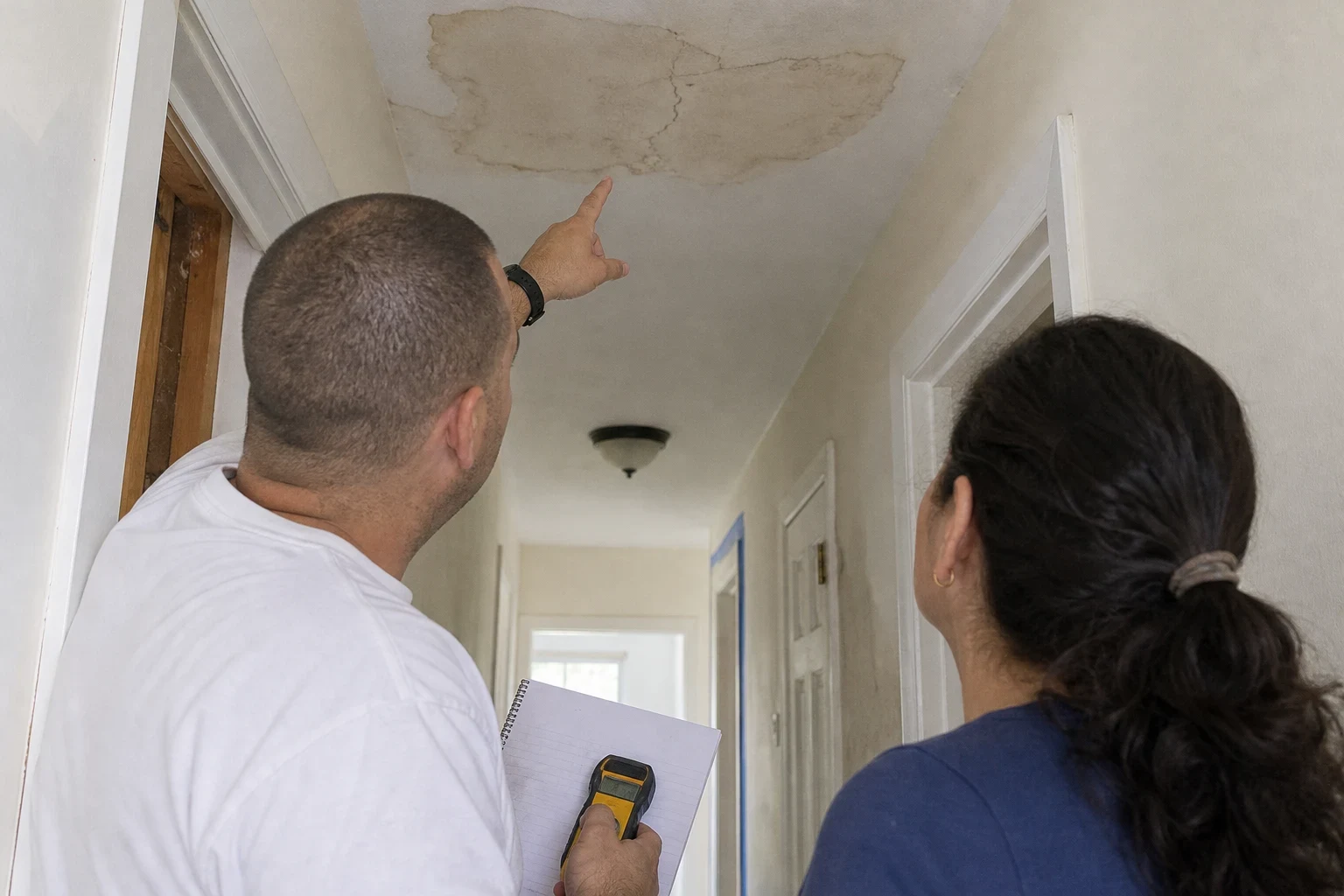
Brown rings or drywall that gives when you press it point to past or current water. Once the leak is stopped, the damaged board should come out.
Bubbling or peeling tape
Tape that lifts or blisters lost its bond, often from humidity or a thin first coat. It needs to be cut out and redone.
Holes from doors and moving day
Doorknob holes, dents from furniture and anchors torn out of the wall are all quick fixes when done right.
What affects the cost of drywall repair
No two repairs cost the same, because the damage behind the surface varies. We look before we price and explain each part of the quote. If something changes once a wall is open, we stop and talk with you first.
Size and number of spots
One doorknob hole is a small job. Several areas across different rooms take more material and more time.
What's behind the wall
Wet framing, missing backing or older plaster beside the drywall can add steps. Many older homes around Elizabeth mix plaster and drywall, which changes how we tie in a patch.
Texture and location
A smooth wall at eye level is simpler than a textured ceiling or a stairwell that needs extra setup to reach safely.
Finish level
Walls under strong window light show every flaw, so they may need extra coats and more careful sanding.
How the job goes
- 1
Talk it through by phone
You tell us what you're seeing and where. We ask a few questions so we show up with the right materials.
- 2
Look and explain
At your home we look at the damage, check for moisture, and tell you in plain words what needs to happen. You get your quote before any work starts.
- 3
Protect, cut and patch
We cover the floors and set up the work area, then remove damaged board and install the patch or new piece. Tape and the first coat of compound go on the same visit.
- 4
Finish coats and cleanup
Each layer of mud has to cure fully before the next one goes over it. On a bigger repair that usually means coming back a second or third day, and you'll know the plan before we begin. After the final sanding and primer, we clean up and walk you through the result.
Drywall repair questions
Can you match the texture on my wall or ceiling?
In most cases, yes. We look at how the existing texture was applied and copy it on the repair. Very old or unusual textures can take a few test passes, and we'll tell you if we expect that.
How much dust will there be?
Some, but we keep it in the work area. We hang plastic, cover floors and furniture, and vacuum when we finish each day. Most of the sanding is light because we put compound on in thin coats.
Will I need to repaint the whole wall?
Not always. We prime the patched spot, and if you still have a can of the wall color, we'll brush or roll it over the repair. Paint that has aged or faded on the wall may not blend perfectly with fresh paint from the can. We'll point that out before we start so there are no surprises.
I had a leak. When can you fix the drywall?
Once the source of the water is fixed and the area has dried out. We check moisture before closing anything up, because new drywall over a wet stud can grow mold. Wet board comes out completely.
Will you help with my insurance claim?
We can give you a written quote and photos of the damage we found, which most adjusters ask for. We don't act as your adjuster or decide what's covered, but we're happy to explain the repair to them.
Get that wall fixed and the room back
Tell us what happened and where. We'll explain what the repair involves and get you a quote by phone before anyone touches the wall.