ServicesPaint Touch-Ups
Paint Touch-Ups in Elizabeth, NJ
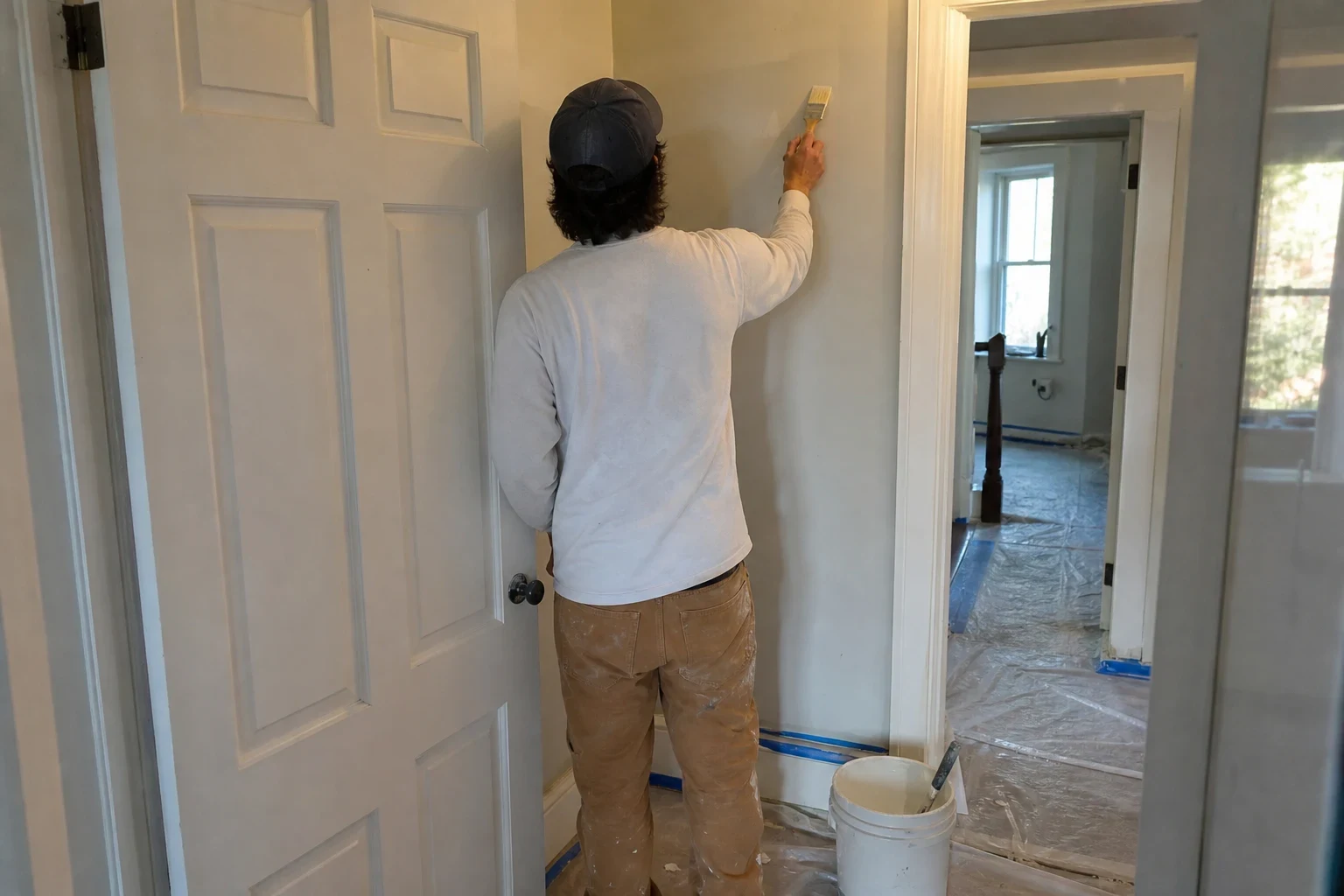
We touch up paint over drywall patches, scuffs and nail holes so the spot matches the wall around it. We cover your floors, tell you what we see before we start, and leave a clean work area when we pack up.
When a touch-up is the right fix
A paint touch-up covers a small area. A fresh patch, a row of nail holes, a scuffed hallway, the outline where a mirror hung for years. Done right, you stop seeing it. Done wrong, you get a shiny square that shows every time the light hits the wall.
A lot of our touch-up work follows drywall patching or ceiling repair, because a patch isn't finished until the paint matches. We also come out just for touch-ups, for homeowners, landlords and property managers who have marks and small dings to clean up.
Sometimes a touch-up won't blend. Old paint fades and yellows, and flat paint behaves differently from satin. If we think a spot will show no matter what, we tell you at the walk-through, before you spend money on it.
What a touch-up includes
Color matching
If you have a leftover can, we use it. If not, we take a small chip from a hidden spot, like inside a closet, and have it matched.
Sheen matching
Flat, eggshell, satin and semi-gloss all reflect light differently. The wrong sheen is the most common reason a touch-up shows, so we check it before we open a can.
Priming bare patches
Joint compound soaks up paint faster than a painted wall. We prime fresh patches first so the spot doesn't look dull or blotchy after it dries.
Feathered edges
We roll the paint out past the repair and soften the edges instead of dabbing a brush on one spot. That keeps you from seeing a hard outline.
Floor and furniture protection
Drop cloths go down before any paint comes out. We move small items with your okay, tape where needed, and take everything with us when we leave.
Signs you need a paint touch-up
A patch still shows
You can see the white or gray of joint compound, or the outline of a repair through the paint.
Scuffs in busy spots
Hallways, stairways, the wall behind a door and the area around light switches take the most wear. Cleaning only goes so far.
Holes from pictures or shelves
You took down a TV mount or a gallery wall and now have a cluster of holes and anchors. Those get filled, sanded and painted to match.
Old touch-ups that flash
Earlier spot painting left shiny or darker patches you notice when the sun comes in. That usually means the sheen or color was off.
A new ceiling repair looks too white
Fresh ceiling paint stands out against a ceiling that has aged. Blending it in often means painting out to a natural break line.
How a touch-up job runs
- 1
The phone call
Tell us what the spots are and which rooms they're in. We'll ask if you have leftover paint or know the brand and color name.
- 2
Walk-through and written quote
We look at each spot in person, check the sheen and tell you which ones should blend and which may not. You get a written quote that lists the work, so you know what you're paying for.
- 3
Job day
We cover the floor, prime any bare patches, then paint and feather the edges. Most spots need two coats. We let you know which rooms to keep kids and pets out of and for how long.
- 4
Final look and cleanup
We check the work with you, with the lights on and in daylight if we can. Then we fold up the drop cloths, bag the trash and leave the room the way we found it.
What affects the price of a touch-up
A touch-up is usually a small job, so the price comes down to a few practical things. We go over them at the walk-through. The written quote shows what we'll do, so there's no surprise at the end.
- How many spots, and how big
- A few nail holes in one room is a short visit. Scuffs spread across a hallway and two stairways takes longer.
- Matching the paint
- A leftover can saves a step. Without one, we take a sample and have the color mixed, which adds time.
- Repairs underneath
- If a spot needs patching first, that work comes before the paint. Our Drywall Patching page covers that part of the job.
- Sheen and wall size
- Glossier paint shows every edge, so it often needs a wider area painted to blend. Flat paint is more forgiving.
- Height and access
- Ceilings, stairwells and high walls mean ladders and more setup. That gets figured into the quote.
Paint touch-up questions
Something not covered here? (908) 332-8943
Do I need the original paint can?
No, but it helps. If you have it, check the lid for the brand and color name. If not, we take a small chip from a spot no one sees and have it matched.
Will the touch-up really match?
Most do, if the color and sheen are right and the paint on the wall isn't too old. Paint that has faded for many years can be hard to blend in one spot. We'll tell you up front if we think a spot will show, so you can decide before any work starts.
Can you patch the hole and paint it in the same visit?
Small holes, often yes, using a quick-setting compound. Bigger patches need time to dry and get sanded before paint goes on, so those usually take a return trip. We'll tell you which it is when we quote.
How soon can we use the room again?
Usually the same day. The paint is dry to the touch fairly quickly, but don't scrub or hang anything on the spot for a couple of weeks while it fully cures. We'll leave you a note on when it's safe to clean.
Do you do touch-ups outside Elizabeth?
Yes. We work in Elizabeth and nearby towns like Union, Linden, Roselle and Cranford. Give us a call and tell us where you are.
Get those spots taken care of
Tell us what you're seeing and where. We'll set up a walk-through, give you a written quote, and keep your floors covered while we work.