ServicesDrywall Finishing
Drywall Finishing in Elizabeth, NJ
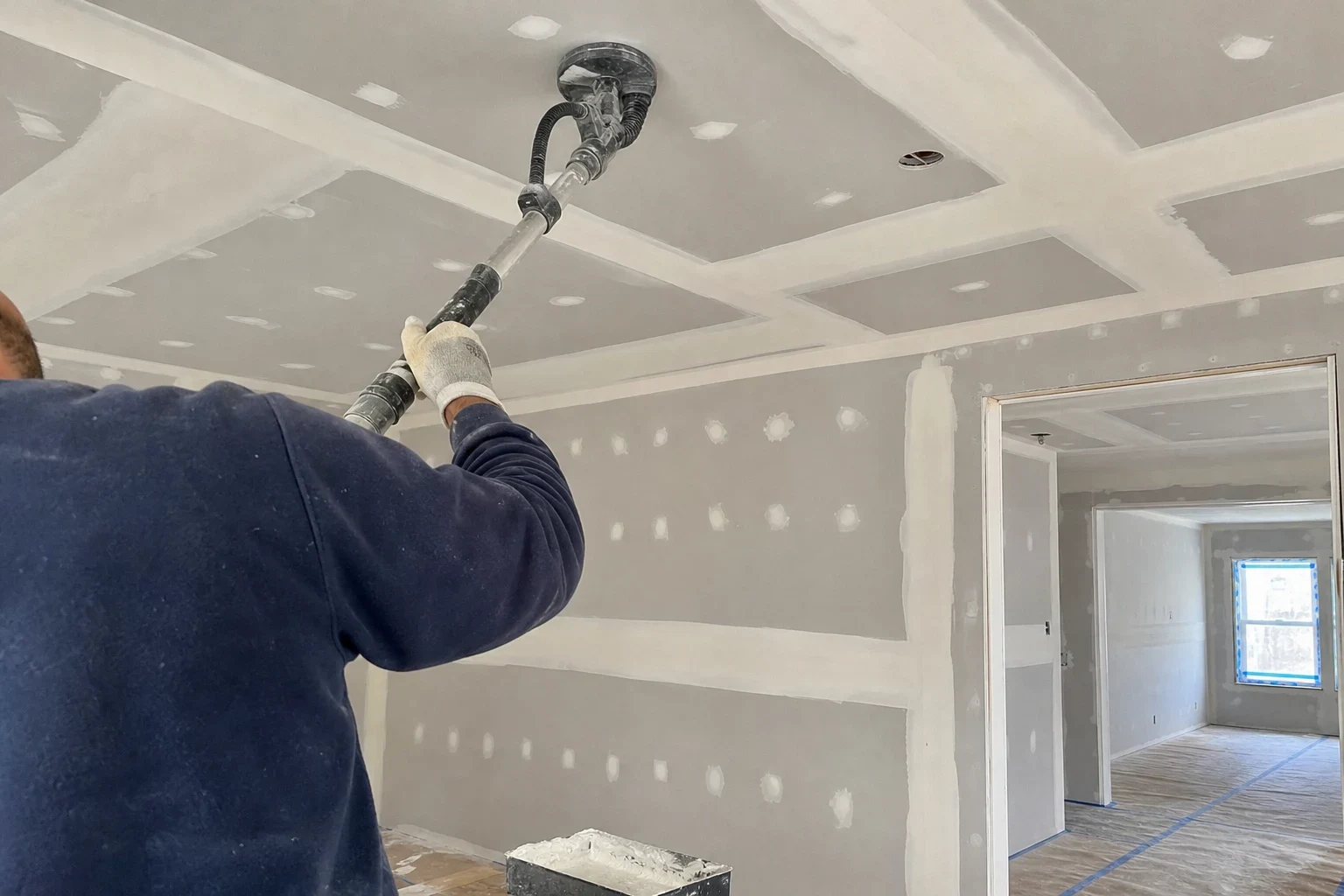
We take bare or patched drywall and make it smooth. Tape on every seam, compound in thin coats, corners set straight and sanding done with the dust kept in the room. Your floors stay covered and you know what happens each day.
What finishing involves and when it makes sense
Putting up the boards only gets you halfway. The other half is finishing: tape over the joints, compound over the screws, bead on the corners and coat after coat until the wall looks like a single flat plane. When it is done well, no seam shows through the paint.
Call for finishing once new drywall is up, after a large patch or section swap, or when an older wall was finished poorly and the joints all show. If the board is already on the wall and just needs to look right, you are in the right place. If it still has to be put up, see our drywall hanging page first.
The job happens in your house, and we act like it. Floors get drop cloths and rosin paper, doorways and vents get plastic, and before starting we talk with you about which rooms we need and for how long.
What you get with our finishing work
- Paper tape on all joints
- Flat seams and inside corners get paper tape pressed into a bed of compound. On long joints, paper outlasts mesh and is less prone to cracking down the road.
- Straight corners and openings
- We set metal or paper-faced bead on outside corners so it sits straight and snug. Window returns and other openings get the same attention, so every line reads crisp.
- Compound built up in layers
- The usual sequence is a tape coat plus two finish coats, each spread thinner and wider than the one before. Every pass covers the screw heads again. When time is short, the first coat is setting compound, since it hardens sooner.
- Light sanding between layers
- Before each new coat, we take down any ridges with a light sanding. Where it fits, the sander runs into a vacuum, which catches much of the dust before it can spread through the house.
- A finish level that fits the room
- A standard finish looks right under paint on most walls. If a wall gets hard light from the side or you plan a glossy paint, the whole surface may need a skim coat, and we will let you know if that is the case.
- A tidy room every evening
- We vacuum, take down plastic that is no longer needed and leave the work area clean. When we finish, the wall is ready for primer and paint.
Signs your drywall needs finishing work
You can see every seam
Long lines or humps show up on the wall, especially when light hits it from the side. That usually means too little compound or poor feathering.
Screw heads are popping through
Small round bumps or dimples in rows mean the fasteners were not covered well. They get worse with time.
Tape is lifting or bubbling
Tape that was not bedded in enough compound loosens and blisters. It has to come off and be redone.
New boards, no finish yet
The drywall is hung but still bare gray with open joints. Finishing turns it into a wall you can paint.
Cracked inside corners
Hairline cracks running up a corner often come from thin tape coats or movement. We cut them out and retape.
What moves the cost of drywall finishing
Finishing is priced mostly by how much wall and ceiling there is and how smooth it has to be. We look at the job, then give you a clear quote by phone or on site with the work spelled out. No surprise add-ons later.
Square footage and number of seams
More boards mean more joints, more corners and more compound. A room with lots of small pieces takes longer than one with full sheets.
Ceilings and height
Ceiling joints are slower to finish than walls. Tall walls or stairwells need staging, which adds time.
Level of finish
A standard finish costs less than a full skim coat. The right choice depends on your lighting and the paint you plan to use.
Fixing earlier work
If old tape is loose or seams were finished poorly, we remove and redo them before the new coats. That adds labor.
Drying time and trips
Most jobs need several visits so each coat can dry. Setting compound can shorten that, but it costs more and takes more sanding care.
The steps of a finishing job
- 1
Look over the walls together
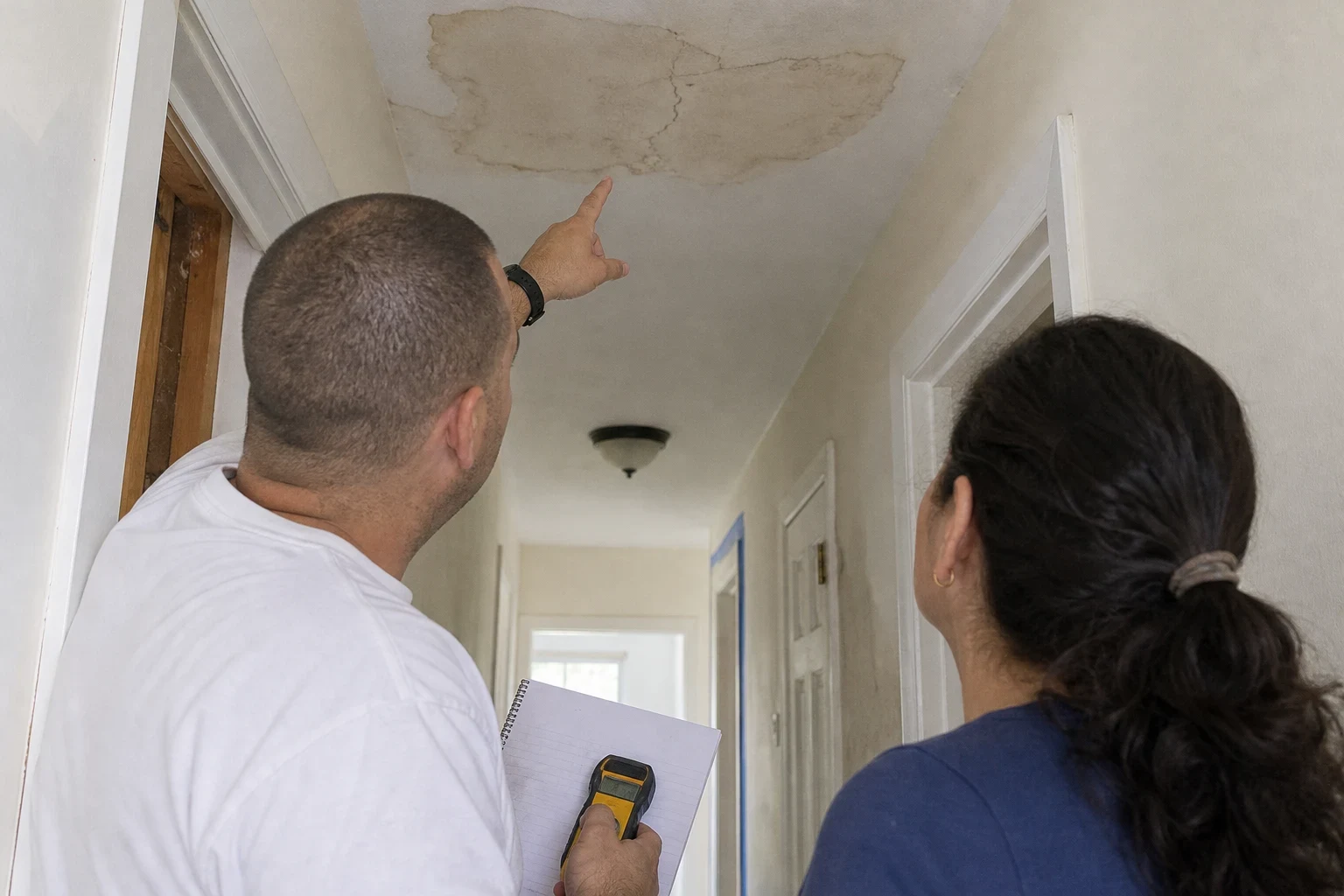
We check the boards, the joints and how light falls in the room. Then we tell you the plan, how many days it needs and which spaces we have to close off.
- 2
Cover and seal the room
The floor is covered wall to wall. Plastic goes over doorways and return vents to hold the dust in. Movable furniture is pulled to the center and covered.
- 3
Taping and the first coat
We tape the joints, bead the corners and put the first coat over the screws. Nothing else happens until that coat is completely dry.
- 4
Second and third coats
We return for the next two coats and sand lightly in between. Humid summer days slow the drying, and if that pushes things back a day, we tell you.
- 5
Light check and cleanup
A work light held flat against the wall shows any low spots, which we fix before cleaning up. Paint touch-ups on smaller areas can come next if you want them.
Common questions about drywall finishing
How many days does finishing take?
Expect a few days for an average room, since every coat needs to dry before the next one. We are not there all day each day, and some trips are brief. You get the schedule at the start so you can plan.
Will sanding make a dusty mess?
Sanding does create dust, and we keep it in the work room. Doorways and vents get taped plastic, and we sand with vacuum-connected tools where possible. The area is cleaned before we go each day.
Will you finish board another crew put up?
Yes. We inspect the boards first. Missing screws, broken edges or wide gaps get pointed out and fixed before finishing starts, so the wall ends up flat.
Can I paint as soon as you are done?
Yes. The wall is left sanded smooth and ready for primer and paint. On small areas, we can handle paint touch-ups too.
Do you take jobs beyond Elizabeth?
Yes. We finish drywall in Elizabeth and close-by towns such as Union, Linden, Roselle and Cranford. Call and let us know where the job is.
Want seams you can't see?
Let us know about the room, the board and your deadline. We will walk you through the work and give you a clear quote.