ServicesCeiling Repair
Ceiling Repair in Elizabeth
A ceiling crack or water stain is hard to ignore once you see it. We cut out what is damaged, put up sound drywall, match the texture and leave a clean work area. Before we start, you will know what we found and what we plan to do.
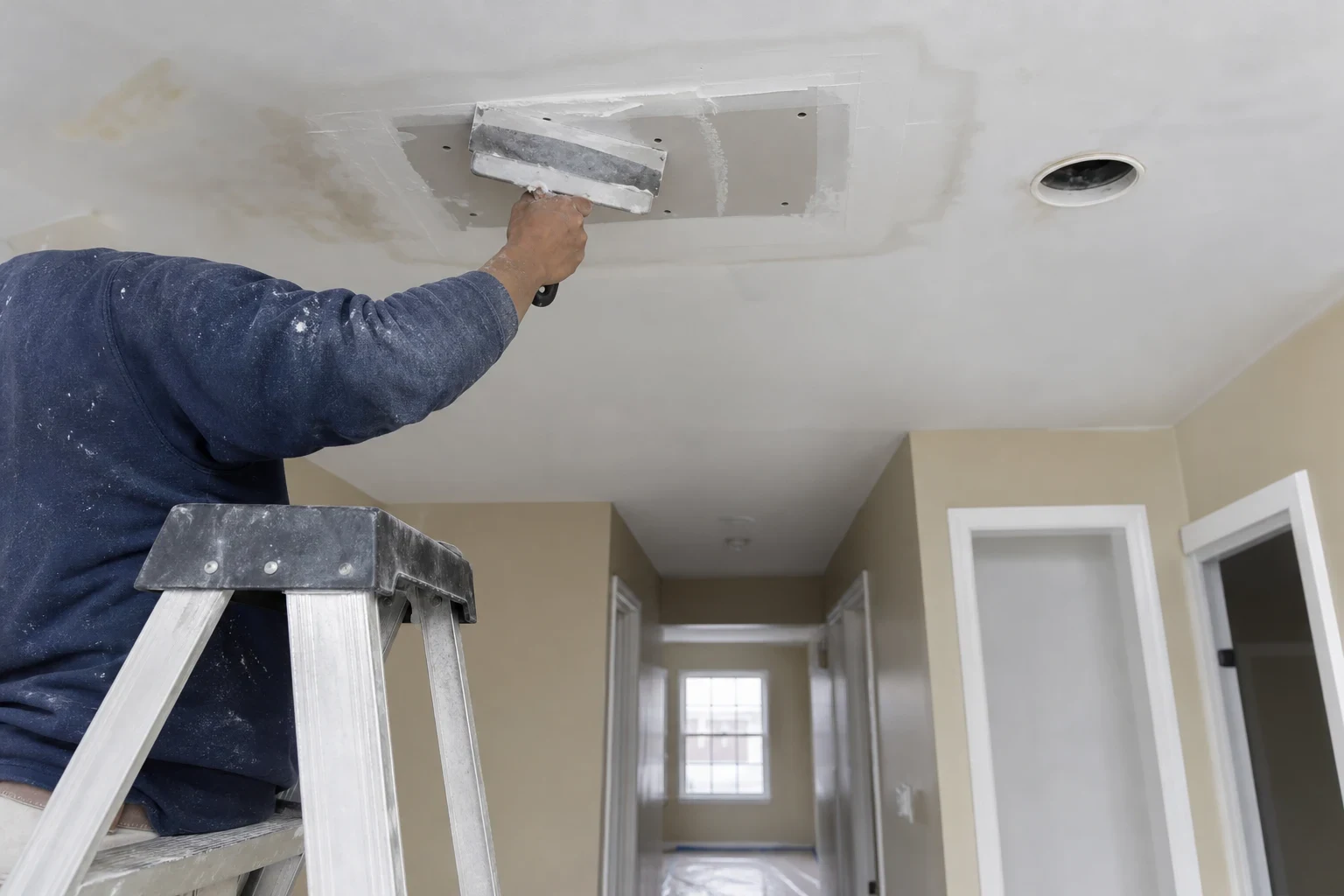
What ceiling repair covers
Ceilings fail in a few common ways. Tape lets go along a seam. A leak from above soaks the drywall until it stains or sags. Screws pop as the framing dries and shifts. Sometimes someone just puts a ladder through it from the attic.
Working overhead is slower and messier than wall work. Dust falls straight down onto whatever is below. That is why we clear and cover the room before any cutting or sanding starts, and why we tell you up front how long each room will be out of use.
Many older houses around Elizabeth still have plaster ceilings, or drywall laid over plaster. We check what is up there before we quote, because it changes how the repair is done.
What the work includes
- Room protection
- We lay drop cloths and plastic over floors and furniture. When dust is a concern we hang plastic sheeting at the doorway so it stays in the room we are working in.
- Cutting out damaged drywall
- Soft, stained or sagging board gets cut back to solid material and framing. We do not skim over wet or crumbling drywall, because it fails again.
- New board and fastening
- We fit new drywall, screw it to the joists or add backing where needed, then tape the seams.
- Mud, sanding and texture matching
- We apply several coats of joint compound, sand between coats and match the existing texture, whether that is smooth, knockdown or a light spray.
- Primer and paint touch-up
- Stain-blocking primer goes over any water marks so they do not bleed through. If you have the ceiling paint, we can do a paint touch-up on the repaired area.
- Cleanup
- We bag the debris, vacuum and wipe down the area before we leave.
When a ceiling needs fixing
Yellow or brown water marks
These rings mean water reached the board at some point. The stain may be dry now, but the drywall behind it can still be weak.
A dip or bulge overhead
When board droops between the joists, it has usually soaked up water or pulled off its fasteners. Keep everyone out from under that spot and have it checked soon.
Straight cracks at the joints
A long, straight line points to tape coming loose. Left alone, a short one can run the width of the room.
Rows of little bumps
Round bumps lined up in a row mark screws that have worked loose. Caught early, they are a simple fix.
Damage from the attic or a fixture
A misstep in the attic or a light taken down can leave an opening. It needs a real patch, not a smear of filler.
What sets the price
No two ceilings are alike, so we give a price once we have seen yours. How big the damage is counts, and so does what sits above it. You hear the price and what it covers before any work starts, so nothing changes on you later.
How many spots and how big
A single small hole runs less than a stain covering half the room. Fixing several spots on one visit takes less time than separate trips.
How far the water went
Wet insulation or board that is soft beyond the stain means a larger section comes out.
Ceiling texture
A smooth ceiling is the easiest. Knockdown or older popcorn takes more work to blend, and older popcorn may need to be tested before it is disturbed.
Reach and room setup
High ceilings and stairwells call for taller ladders or scaffolding. A room full of furniture takes more time to clear and cover.
Plaster or drywall
A plaster ceiling takes more steps to repair than ordinary drywall.
How a ceiling repair job goes
- 1
Phone call and look
You tell us what you are seeing. We come look, check for moisture and confirm what the ceiling is made of. If a leak is still active, we will tell you to get it fixed first.
- 2
Clear plan before work
We walk you through what we found, what gets cut out and how many days it will take. You know which rooms to keep people out of and when.
- 3
Protect, cut and hang
Floors and furniture get covered first. Then we remove the damaged section and install new drywall.
- 4
Finish coats
Joint compound needs time to dry between coats. Most repairs take a few visits over several days, and we tell you each day when we will be back.
- 5
Final walk-through
We look at the repair with you in good light, touch up anything you point out, and clean up.
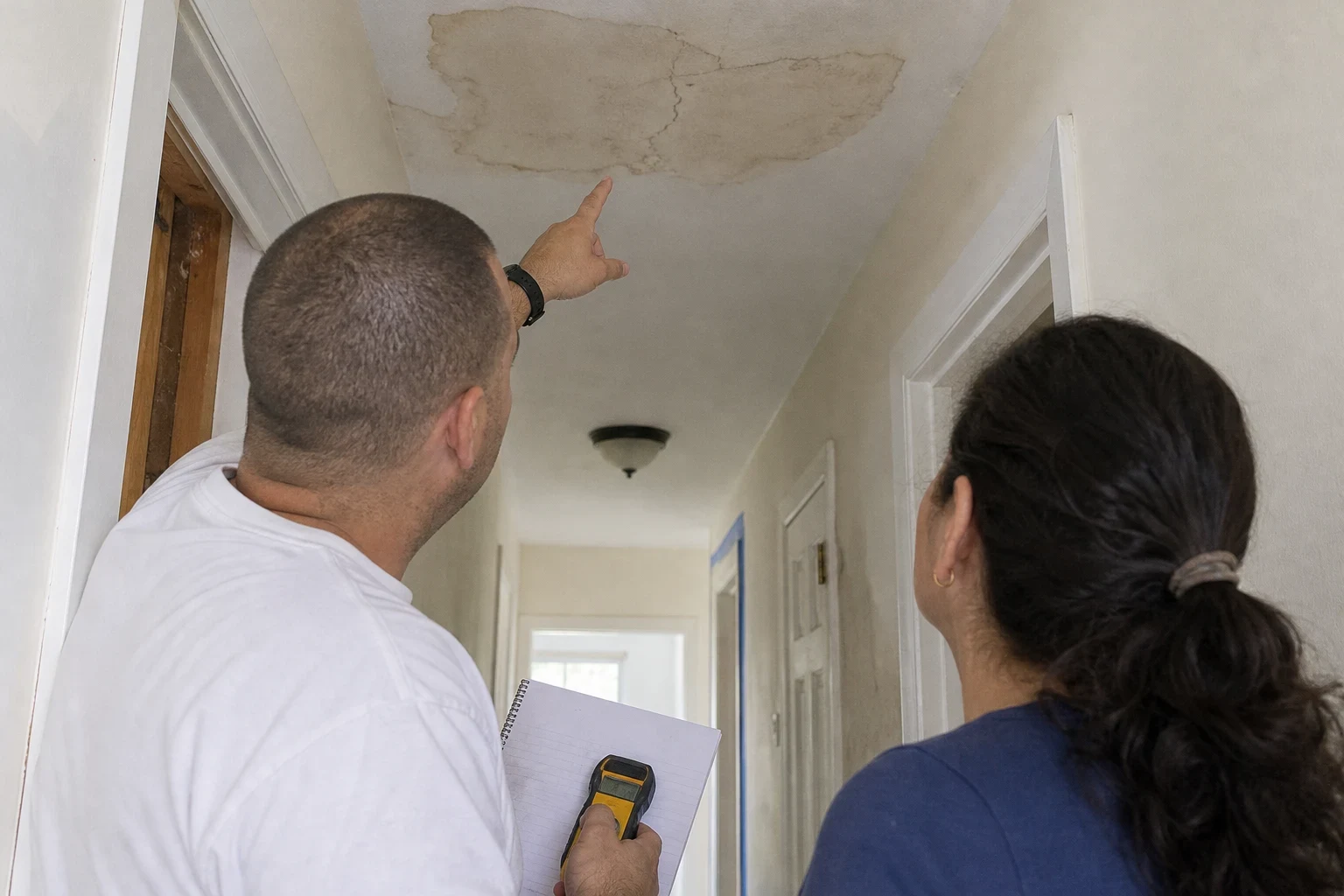
Questions about ceiling repair
Can the stain just be painted over?
Ordinary paint tends to let the mark show again. We put down a stain-blocking primer first. When the board behind the stain has gone soft, that piece has to be cut out and replaced.
Will you repair the leak too?
No. We fix the ceiling after the leak itself has been repaired. If anything tells us it is still wet, you will hear about it before we start.
Will dust spread through the house?
The room we work in will get some, and that is where it stays. Sanding overhead drops fine powder on whatever is underneath, so floors and furniture are covered before any cutting. If the room is open to the rest of the house, we tape plastic across the doorway. Each day ends with vacuuming and wiping down, so you are not living in it.
Will I be able to see the patch?
Our goal is a patch you cannot find on the finished ceiling. Matching texture takes care and sometimes more than one pass. Before we call it finished, we look at it with you in good light.
Can I be home while you work?
Yes, and most people are. We only ask that nobody uses the room during cutting and sanding.
Have us check that ceiling
Let us know what you are seeing and in which room. We will book a visit, tell you what the repair takes and keep your home clean during the work. We cover Elizabeth and close-by towns such as Union, Linden and Cranford.