ServicesDrywall Patching
Drywall Patching in Elizabeth
A doorknob went through the wall. An old TV mount left a row of holes. We cut out the damage, set a solid patch, tape and feather it flat, and sand it smooth. Floors stay covered, and we tell you what each step is before we start.
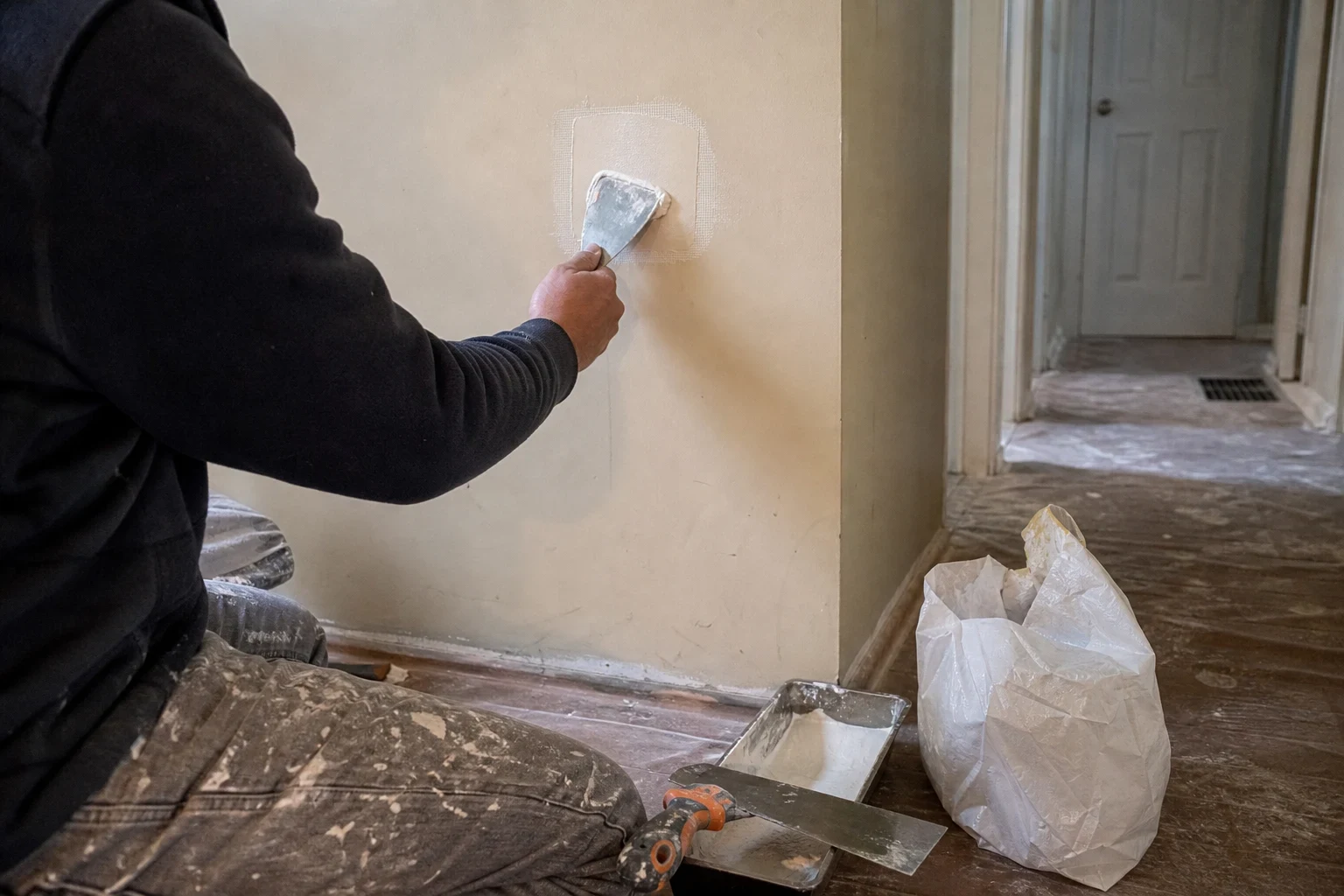
When Patching Makes Sense
A patch fits damage measured in inches: a fist-sized dent behind a door, holes left by shelves and anchors, an opening where an electrician pulled a wire, or a line of nail pops along a stud. The rest of the wall is solid, and only that spot needs attention.
When the damage runs wider than a sheet seam, has gone soft from water, or the board is breaking apart at the edges, a patch won't last. That calls for our drywall repair or wall repair service, and we will tell you so on the phone rather than sell you a patch that cracks within a month.
Most patches take one or two short visits, since joint compound must dry between coats. The work stays in one small corner of the room, and the rest of the house carries on as usual.
What You Get With a Patch
Covered floors and furniture
Drop cloths and runners go down from the entry to the spot we are fixing. Nearby furniture is moved or covered. Dust from sanding lands on the cloth instead of your floor.
Square cuts and solid backing
We square off ragged holes so the new piece fits snugly. Anything over a few inches gets wood or metal backing screwed in behind it, so the patch can't sink.
Tape, compound and wide edges
The edges get taped, then compound goes on in thin layers that each reach a bit wider. Spreading the edges out this way keeps the patch from showing as a bump when light hits it.
Matching the wall's texture
Lots of walls have some texture. We copy light orange peel, knockdown or the faint roller pattern from years of paint so the patch disappears into it.
Final sanding and cleanup
The last sanding is done by hand or with a sander tied to a vacuum. We wipe down the area and roll up the cloths before heading out.
Signs a Patch Will Do the Job
Doorknob or furniture holes
A round hole behind a door is the most common patch we do. Adding a door stop afterward keeps it from coming back.
Anchor and mounting holes
Pulled-out anchors leave torn paper and crumbled gypsum. Spackle alone tends to sink, so we cut back to solid board first.
Nail and screw pops
Small round bumps along a straight line mean fasteners have backed out. We reset them, add a screw beside each one and patch over.
Small electrical or cable cutouts
Holes left from moving an outlet or running a cable are easy to patch once the wiring work is done.
Dents and gouges
Scrapes from moving day or a chair back hitting the wall. If the paper face is torn, we seal it before adding compound so it does not bubble.
How a Patching Visit Goes
- 1
Talk it through by phone
Tell us how many holes, roughly how big, and which rooms. Photos help us bring the right size patches and backing.
- 2
Set up and protect
On arrival we walk the spot with you, cover the floor, and move what needs moving. We tell you how long each coat takes to dry.
- 3
Patch and first coats
We cut, back, set the patch and tape it. Bigger patches usually need a second visit for the final coat once the first has fully dried.
- 4
Sand, texture and check
We sand smooth, match the texture and shine a work light across the wall to catch edges. Then we clean up and walk it with you again.
What Changes the Price of a Patch
Patching is mostly priced by the number and size of the holes, plus how many trips it takes to get the finish right. We go over the factors with you on the phone and explain anything that would change the number before we start.
- Size and count
- A few small anchor holes are quick. A dozen spots spread across three rooms take more setup and more compound.
- Backing needed
- Holes over a few inches need backing screwed in behind the patch, which adds time and material.
- Texture on the wall
- Smooth walls are simplest. Matching knockdown or an older textured finish takes extra steps to blend.
- Location and access
- A patch high on a stairwell wall needs ladders or planks. Spots behind heavy furniture take time to clear.
- Paint after patching
- Fresh compound needs primer before paint. If you want the spot painted, we can add paint touch-ups using paint you have on hand.
Common Patching Questions
Something not covered here? (908) 332-8943
Will anyone be able to spot the patch?
Not when it is done properly. What matters is thin, wide coats and a texture that matches the wall around it. Paint plays a part too. Faded old paint can make a good patch look wrong, so we will tell you whether a spot touch-up or a full repaint of the wall makes more sense.
Can one visit cover patches in several rooms?
Yes. We set up at each spot, keep the floor covered and work through them one after another. Doing several patches together usually costs less than calling us back for each.
When can I paint the patch?
The compound has to dry completely and get primed first. In most houses that is about a day after the final coat, and longer when summer is humid. We will let you know when it is ready.
Should I move furniture before you arrive?
If you can, clear small things off shelves and tables close to the wall. We take care of moving and covering bigger pieces and put them back afterward.
What happens if the damage is larger than it looked?
Now and then the damage inside the wall spreads past the visible hole. If so, we pause and show you before going further, and you choose the next step.
Do you patch walls in Linden, Union and nearby towns?
Yes. We do patching all over Elizabeth and in the towns around it, such as Linden, Union, Roselle and Cranford.
Get That Hole Off Your Wall
Tell us what you are looking at and we will explain how we would patch it and what it will take. We cover the floor, keep the mess in one spot, and leave the room clean.